
David M. Albala, MD, presented “The Live Primary Cell Phenotypic Test (LPCP) for Prostate Cancer” during the 4th Global Summit on Precision Diagnosis and Treatment of Prostate Cancer on October 3, 2019 in Boston, Massachusetts.

How to cite: Albala, David M. “The Live Primary Cell Phenotypic Test (LPCP) for Prostate Cancer” October 3, 2019. Accessed Dec 2025. https://grandroundsinurology.com/the-live-primary-cell-phenotypic-test-lpcp/

The Live Primary Cell Phenotypic Test (LPCP) for Prostate Cancer – Summary:

David M. Albala, MD, Chief of Urology at Crouse Hospital in Syracuse, New York, discusses the experimental live primary cell phenotypic test (LPCP) for prostate cancer. He details how live, unfixed cancer cells are taken from tissue, plated out on an extracellular matrix, and grown in a single cell monolayer. The LPCP looks at 14 different biomarkers from both normal and malignant cells, and machine learning algorithms generate scores that, according to preliminary research, can accurately predict general, local, and metastatic adverse pathology potential.

About The 4th Global Summit on Precision Diagnosis and Treatment of Prostate Cancer:

The Global Summit on Precision Diagnosis and Treatment of Prostate Cancer is a multi-day, multi-disciplinary forum designated to informing health care stakeholders about topics including in-vitro fluid- and tissue-based molecular diagnostics, novel observation strategies such as active surveillance, and novel therapeutic interventions. Along with this forum’s efforts to form a consensus on the future of prostate diagnostics and precision care, it aims to create an educational and research strategy for its realization. Dr. Albala presented this lecture during the 4th iteration of this Summit in 2019.
ABOUT THE AUTHOR

+ posts

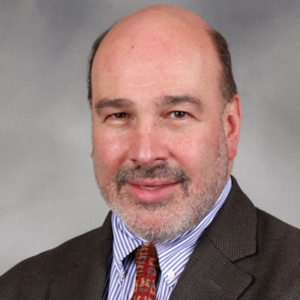
David M. Albala, MD, is a Chief of Urology at Crouse Hospital in Syracuse, New York. Dr. Albala is considered a national and international authority in laparoscopic and robotic urological surgery. His clinical interests include minimally invasive treatments for benign prostatic hypertrophy (BPH), the use of fibrin sealants in surgery, and robotic urologic surgery.

Dr. Albala earned his medical degree at Michigan State University in East Lansing. He completed a residency in Surgery at Dartmouth-Hitchcock Medical Center in Lebanon, New Hampshire. He then completed a fellowship in Endourology at Washington University in St. Louis, Missouri. Under the direction of Ralph V. Clayman, Dr. Albala was part of the team that performed the first laparoscopic nephrectomy in humans. 

Dr. Albala is a past White House Fellow (1995-1996), who acted as a special assistant to Federico Peña, Secretary of Transportation, on classified and unclassified public health related issues. He has been a visiting professor at numerous institutions across the United States as well as overseas in countries such as India, China, Iceland, Germany, France, Japan, Brazil, Australia, and Singapore. He has done operative demonstrations in over 32 countries and 23 states. Dr. Albala has over 215 publications in peer-reviewed journals and has authored 3 textbooks in endourology and 4 books in general urology. He is currently the Editor-in-Chief of theJournal of Robotic Surgeryand serves on the editorial board forCurrent Opinions in Urology, Reviews in Urology,andUrology Index and Reviews. In addition, he serves as a reviewer for 8 other surgical journals. He is currently on the Board of Directors of the Large Urology Group Practice Association (LUGPA). Dr. Albala is also currently the Visiting Professor of Urology at SUNY Downstate Health Sciences University, College of Medicine. Dr. Albala has been identified (by a Stanford University-led study) as one of the top 2% of scientists in the world.