How to cite: Tward JD. A Look at Oligometastatic Disease: Metastasis-Directed Therapy Versus Systemic. Grand Rounds in Urology. February 2026. Accessed Oct 2026. https://grandroundsinurology.com/a-look-at-oligometastatic-disease-metastasis-directed-therapy-versus-systemic/
Summary
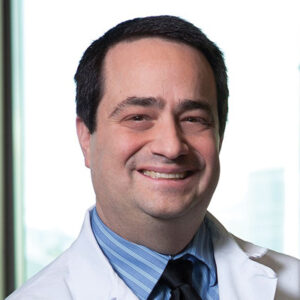
Jonathan D. Tward, MD, PhD, FASTRO, Professor of Radiation Oncology, Huntsman Cancer Institute at the University of Utah, Salt Lake City, Utah, discusses the management of oligometastatic prostate cancer, emphasizing the lack of a universally accepted definition and the challenges in interpreting clinical trial data across heterogeneous patient populations. He highlights that oligometastatic disease varies by timing, imaging modality, and disease biology, including synchronous, metachronous, oligorecurrent, and oligoprogressive states.
Dr. Tward underscores that imaging plays a critical role but introduces uncertainty, particularly with prostate-specific membrane antigen positron emission tomography (PSMA PET), where interpretation variability and reporting ambiguity can complicate clinical decision making. He notes that higher prostate-specific antigen (PSA) levels increase detection rates but also increase interpretive uncertainty.
He reviews randomized trial data demonstrating that metastasis-directed therapy, typically with stereotactic body radiation therapy, improves outcomes compared with observation in hormone-sensitive disease. Trials such as STOMP and ORIOLE show that metastasis-directed therapy delays progression and extends androgen deprivation therapy (ADT)-free survival, particularly when all visible lesions are treated.
Dr. Tward then examines the addition of metastasis-directed therapy to systemic treatment. The EXTEND and RADIOSA trials demonstrate improved progression-free survival when metastasis-directed therapy is combined with ADT. However, he notes that these benefits are primarily reflected in progression endpoints rather than overall survival.
In castration-resistant disease, emerging data from trials such as PCS9 and ARTO suggest that adding metastasis-directed therapy to androgen receptor pathway inhibitor–based regimens may further delay progression and time to next therapy.
Dr. Tward emphasizes that treatment selection should be guided by patient goals. For patients seeking to delay systemic therapy, metastasis-directed therapy alone may be appropriate. For those prioritizing maximal disease control, combination approaches with systemic therapy are supported by current evidence.
He stresses that metastasis-directed therapy has a meaningful role across disease states but must be individualized within a multidisciplinary framework.
The International Prostate Cancer Update (IPCU), is a multi-day, CME-accredited conference focused on new developments in prostate cancer treatment, diagnosis, and prevention. IPCU 36 featured lectures, interactive discussions, panel roundtables, debates, and case reports. This conference is led by expert physicians and is designed for urologists, medical oncologists, radiation oncologists, and other healthcare professionals involved in the diagnosis and treatment of prostate cancer.
The goal of this educational program is to equip healthcare professionals involved in the diagnosis and treatment of prostate cancer with the up-to-date clinical knowledge and tools they need to best treat their patients. The program will discuss the treatment of prostate cancer from diagnosis to treating advanced and metastatic disease. The conference aims to give physicians exposure to a comprehensive review of treating prostate cancer patients and to give them a chance to discuss the issues with peers and experts.
ABOUT THE AUTHOR

Jonathan D. Tward, MD, PhD, FASTRO, is a Professor of Radiation Oncology at the University of Utah in Salt Lake City. Dr. Tward also holds the Vincent P. and Janet Mancini Presidential Endowed Chair in Genitourinary Malignancies at Huntsman Cancer Institute (HCI) and directs HCI’s Genitourinary Cancers Center in Salt Lake City, Utah. He is an internationally recognized pioneer in AI–driven digital and molecular oncology. Dr. Tward’s hybrid expertise in clinical oncology, computational science, and molecular biomarker discovery positions him as a global leader shaping the future of AI-powered digital and molecular oncology.