
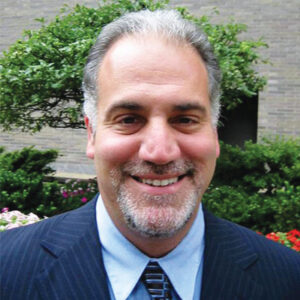
Richard G. Stock, MD

Richard G. Stock, MD

Icahn School of Medicine at Mount Sinai

New York, New York

Richard G. Stock, MD, is a Professor of Radiation Oncology at Mount Sinai in New York, New York. Dr. Stock’s clinical interests include cancers of the bladder, prostate, testis, and bone. His research focuses on prostate cancer and prostate brachytherapy. Dr. Stock is best known for establishing a comprehensive prostate cancer database with a corresponding IRB approved protocol to track treatment outcomes following prostate cancer therapies.

Dr. Stock earned his medical degree and an internship in Internal Medicine from Mount Sinai. He then completed a residency in Internal Medicine at the Beth Israel Medical Center in New York, New York. Dr. Stock then completed a residency in Radiation Oncology at the Memorial Sloan Kettering Cancer Center in New York, New York.

Dr. Stock has served on the board of American College of Radiology Testing and the American Brachytherapy Society. He also served as a guest editor of a special Brachytherapy issue of Techniques in Urology. Dr. Stock has authored and co-authored over 140 publications and has contributed substantially to the understanding of prostate brachytherapy. Dr. Stock is also a co-investigator on Department of Defense, American Cancer Society, and NIH RO1 grants to study the relationship between genetic mutations and radiation side effects for patients undergoing radiation for prostate cancer.  In a recent publication in the International Journal of Radiation Oncology Biology Physics, Dr. Stock ranked among the top 4% of academic Radiation Oncologists in terms of the h-factor, a surrogate score for research productivity.

Talks by Richard G. Stock, MD

Brachytherapy and Focal Therapy Outcomes

Richard G. Stock, MD, Professor of Radiation Oncology and Director of Genitourinary Radiation Oncology at the Icahn School of Medicine at Mount Sinai in New York City, discusses focal therapy and brachytherapy. He outlines the rationale for focal therapy, reviews patient selection, and provides an extensive evaluation of the supporting evidence. For the small percentage of patients that may not have bilateral, multifocal disease, partial gland treatment can reduce morbidity and leave open future partial gland treatment options, should they become necessary. In general, patients in most studies examining focal therapy have unilateral disease, an MRI detectable lesion, Gleason score of <=7, and PSA <= 10ng/ml. Dr. Stock considers the types of focal therapy such as cryotherapy, high-intensity focused ultrasound (HIFU), and brachytherapy, highlighting the importance of treating the margin surrounding the tumor in any focal therapy. He then describes focal low dose rate brachytherapy and provides recommendations including a preplan and real-time ultrasound to ensure accuracy and minimize side effects. Lastly, Dr. Stock reviews data analyzing changes in morbidity, erectile function, and quality of life in whole gland and hemigland treatment plans.

Read More

Long-Term Outcomes of Permanent Brachytherapy

Richard G. Stock, MD, compares long-term overall survival and morbidity outcomes of brachytherapy alone versus a brachytherapy/ external beam combination in intermediate and high risk prostate cancer. He also discusses factors that could affect those outcomes, such as the patient’s intermediate-risk features, duration of androgen deprivation therapy (ADT), and technique of seed implantation.

Read More