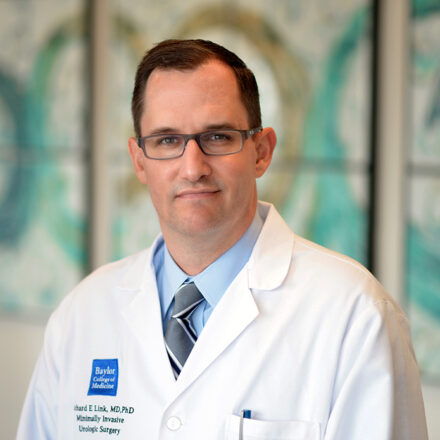
How to cite: Link RE. “Building a Reproducible Training Pathway for Future da Vinci SP Surgeons.” September 19, 2025. Accessed Oct 2026. https://grandroundsinurology.com/building-a-reproducible-training-pathway-for-future-da-vinci-sp-surgeons/
Summary
Richard E. Link, MD, PhD, Carlton-Smith Endowed Chair in Urologic Education, Baylor College of Medicine, Houston, Texas, presents a structured framework for training the next generation of da Vinci single-port (SP) robotic surgeons. Dr. Link emphasizes that in 2025, training programs must offer SP robotics to remain competitive and relevant. He notes increasing evidence supporting the platform for both benign and malignant conditions and predicts that single-port procedures will progressively replace multiport approaches as institutional investment continues. Many residents now seek employment specifically in practices with SP systems and view SP proficiency as a differentiator.
Drawing on nearly four years of SP experience, Dr. Link clarifies that the SP system is not an advanced form of multi-port robotics, but a distinct platform that requires a unique learning pathway. Residents do not need advanced multiport expertise before starting SP training. Early exposure to consoles and simulation, particularly in camera and arm control modules, is essential. Pre-case educational timeouts, in which attendings and trainees review rationale, advantages, and challenges, improve engagement and understanding.
Dr. Link describes three progressive competency phases: beginner (basic camera work and suturing), intermediate (spatial organization and minimizing arm conflicts), and advanced (utilizing a 360-degree arm and complex repositioning). He details strategies for dual-console teaching, bedside efficiency, port management, and maintaining safety during relocation and retraction tasks. Practical examples in partial nephrectomy illustrate the importance of task allocation based on experience.
Dr. Link argues that early trainee participation and structured involvement throughout the learning curve are critical to reproducibility, efficiency, and enthusiasm in SP robotic surgery education.
About The 29th Annual Innovations in Urologic Practice:
Presented by co-chairs Mohit Khera, MD, MBA, MPH, and Michael Coburn, MD, FACS, the Innovations in Urologic Practice conference provides a detailed review and commentary on multiple genitourinary and urologic diseases. Among the featured oncological topics are bladder cancer and immunotherapies, as well as upper tract cancer management, prostate cancer, including state-of-the-art imaging, focal therapy, and MRI. Experts also discuss new tools and techniques for nephrectomy and treating advanced renal cell carcinoma. In terms of general urological approaches, the conference also includes pelvic reconstruction and trauma, men’s health topics like male infertility and sexual dysfunction, and ways to diagnose and treat infections in the urology patient.
For further educational activities from this conference, visit our collection page.
ABOUT THE AUTHOR
Richard E. Link, MD, PhD, is a professor and board-certified and fellowship-trained urologist specializing in the treatment of urologic disease affecting the kidney, ureter, adrenal gland and prostate. Dr. Link holds the Carlton-Smith Endowed Chair in urologic education at the Baylor College of Medicine (BCM) in Houston, Texas and directs the BCM division of endourology and minimally invasive surgery. He serves as director of living donor procurement for several major kidney transplant programs in Houston, including Baylor St. Luke’s Medical Center, Texas Children’s Hospital, and the Houston Methodist Hospital. Dr. Link focuses on the use of laparoscopic, robotic-assisted, percutaneous, and endoscopic techniques to treat kidney and prostate tumors, benign prostatic hypertrophy, renal and ureteral obstruction, and urinary tract stones and has been an early pioneer in the development of laparoendoscopic single-site donor nephrectomy.
Dr. Link earned both his MD and PhD in molecular and cellular physiology at Stanford University in California and completed an internship and residency at BCM before completing a fellowship at The Johns Hopkins University School of Medicine in Baltimore, Maryland. Dr. Link also has a strong interest in applying single site robotic technology using the da Vinci SP platform to retroperitoneal and transvesical urologic surgery. He has published numerous papers and earned many awards, including the Fulbright and Jaworski LLP Faculty Excellence Award for Teaching and Evaluation at BCM.