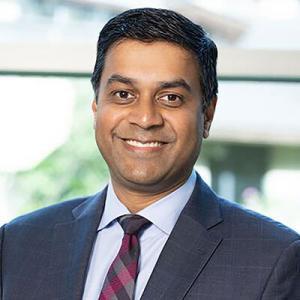
Jay Simhan, MD, FACS, presented “IPP and Penile Curvature Decisions: Doing Nothing, Something or Everything” during the 44th Annual Ralph E. Hopkins Urology Seminar on February 7, 2025, in Jackson Hole, Wyoming.
This content is available free to the GRU Community. Login or create an account to view it.
How to cite: Simhan, Jay. “IPP and Penile Curvature Decisions: Doing Nothing, Something or Everything.” February 7, 2025. Accessed Oct 2026. https://grandroundsinurology.com/ipp-and-penile-curvature-decisions-doing-nothing-something-or-everything/
IPP and Penile Curvature Decisions: Doing Nothing, Something or Everything – Summary
Jay Simhan, MD, FACS, examines the challenges of penile implants in patients with refractory erectile dysfunction and Peyronie’s disease. In this 18-minute presentation, Dr. Simhan highlights the patient-driven demand for larger implants and contrasts it with other urological trends favoring smaller instruments.
Dr. Simhan explores the evolution of Peyronie’s treatment, emphasizing how collagenase injections have supplemented but not replaced surgical interventions. A spectrum of surgical approaches is outlined, ranging from minimal intervention to complex procedures involving neurovascular bundle mobilization and plaque incision.
Dr. Simhan categorizes strategies into three options: implantation only, incorporating additional corrective maneuvers, or performing extensive reconstruction. Each approach’s risks and benefits are examined. The importance of aligning surgical intervention with patient expectations is emphasized. Dr. Simhan shares his philosophy favoring minimalism in treatment, reserving aggressive interventions for severe deformities, or patients seeking perfection.
About The 44th Annual Ralph E. Hopkins Urology Seminar:
The Ralph E. Hopkins Urology Seminar is a multi-day meeting focused on training urologists in the latest in assessing, diagnosing, and treating urologic conditions in the clinical setting. Updates are provided on urologic cancers, stone disease, urologic reconstruction, female urology, infertility, sexual function, emerging surgical techniques, and general urology. The 44th iteration of the meeting took place from February 5th to February 8th, 2025, in Jackson Hole, Wyoming.
For further educational activities from this conference, visit our collection page.
ABOUT THE AUTHOR

Jay Simhan, MD, FACS, is Professor and Chair of the Department of Urology at Temple University Hospital and the Lewis Katz School of Medicine at Temple University in Philadelphia, Pennsylvania. He also serves as Director of Reconstruction and Prosthetics at Fox Chase Cancer Center, Fellowship Director of the Reconstructive and Prosthetic Urology Fellowship Program, and holder of the Carol and Louis Della Penna Chair in Urologic Cancer Survivorship.
An internationally recognized reconstructive urologist, Dr. Simhan specializes in complex urinary tract reconstruction, genitourinary trauma, urethral stricture disease, male urinary incontinence, erectile dysfunction, Peyronie's disease, and urologic prosthetic surgery. His clinical expertise includes open and robotic reconstruction, penile implants, artificial urinary sphincters, and revision surgery for patients with complex urologic conditions. He is particularly focused on restoring urinary and sexual function and improving quality of life following cancer treatment.
Dr. Simhan earned his medical degree from the University of North Carolina at Chapel Hill. He completed his general surgery and urology residencies at Temple University Hospital and Fox Chase Cancer Center, followed by fellowship training in urologic trauma, reconstruction, and prosthetics at the University of Texas Southwestern Medical Center in Dallas, Texas. He also completed executive leadership training at the Wharton School of the University of Pennsylvania.
An accomplished researcher, educator, and author, Dr. Simhan has contributed extensively to peer-reviewed publications and clinical research focused on urologic reconstruction, prosthetic surgery, surgical innovation, and patient-reported outcomes. He is actively involved in national and international professional organizations, including the American Urological Association, American College of Surgeons, Society of Genitourinary Reconstructive Surgeons (GURS), Society of Urologic Prosthetic Surgeons, and Sexual Medicine Society of North America. He serves on the Board of Directors of GURS and has held leadership responsibilities overseeing reconstructive urology fellowship education and training.