How to cite: Atiq MO. “Parp Inhibitors: Evidence, Indications and Side Effects.” Grand Rounds in Urology. October, 2025. Accessed Oct 2026. https://grandroundsinurology.com/parp-inhibitors-evidence-indications-and-side-effects
Summary
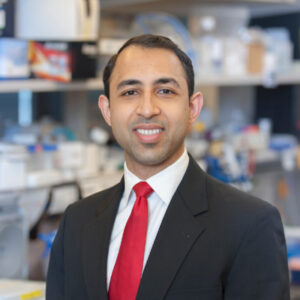
Mohammad O. Atiq, MD, FACP, Assistant Professor of Medicine, University of Chicago, Chicago, Illinois, presents an overview of poly(ADP-ribose) polymerase (PARP) inhibitors in the management of advanced prostate cancer. He explains the mechanisms of this approach and how pathway inhibition increases cancer cell death in tumors that already harbor defects.
Dr. Atiq reviews major clinical data showing the survival and progression data for different treatment options, including olaparib, rucaparib, and talazoparib. He then presents evidence that combination therapy with androgen receptor pathway inhibitors (ARPIs) improves radiographic progression-free survival, highlighting results from the PROpel and TALAPRO trials. He stresses that the magnitude of benefit varies by specific homologous recombination gene alteration, with BRCA mutations driving the strongest response.
He compares the side effect profiles of the treatment options, acknowledging that dose modifications and interruptions are common. He stresses that treatment selection requires careful attention to comorbidities, cytopenias, and renal function.
Dr. Atiq emphasizes that PARP inhibitors provide clear benefit in BRCA-mutated metastatic castration-resistant disease and that combination therapy is expanding access for broader groups. He asserts that genetic testing remains essential for identifying appropriate candidates, and that clinicians must be prepared to manage class-specific toxicities.
Frontiers in Oncologic Prostate Care and Ablative Local Therapy (FOCAL) is an outstanding program on prostate imaging, transperineal interventions, and ablative treatments for prostate cancer and benign prostatic hyperplasia. Bringing together community-based, academic, and industry partners, FOCAL offers lectures by world-renowned faculty and hands-on training workshops on in-office transperineal interventions, fusion-guided prostate ablation and state-of-the-art BPH management with novel technologies.
ABOUT THE AUTHOR

Mohammad O. Atiq, MD, FACP, is an Assistant Professor of Medicine at the University of Chicago in Illinois. Dr. Atiq specializes in hematology and oncology. He is a member of the American Association for Cancer Research, the American Society of Clinical Oncology, the American College of Physicians, the American Medical Association, and the Arkansas Medical Society.