How to cite: Streeper NM. What’s New in Surgical Technology for Kidney Stones? Grand Rounds in Urology. February 2026. Accessed Oct 2026. https://grandroundsinurology.com/whats-new-in-surgical-technology-for-kidney-stones/
Summary
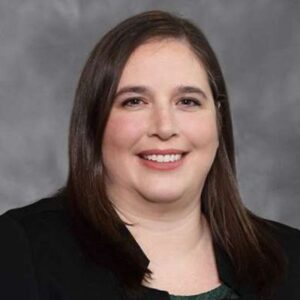
Necole M. Streeper, MD, Associate Professor of Urology, Medical College of Wisconsin, Madison, Wisconsin, reviews evolving technologies in kidney stone surgery. Dr. Streeper describes advances in laser technology, disposable single-use ureteroscopes, improved imaging, and miniaturization of percutaneous nephrolithotomy.
She focuses on suction-assisted ureteroscopy, including flexible, navigable suction sheaths, in-scope suction systems such as CVAC and Pusen DISS, and considerations that influence device selection and procedural strategy. Dr. Streeper reviews fragmentation and dusting approaches and discusses data suggesting improved stone clearance with suction technologies.
Dr. Streeper reviews emerging robotic-assisted ureteroscopy and robotic-assisted mini-percutaneous nephrolithotomy access using electromagnetically guided targeting systems and percutaneous suction catheters. These systems improve access precision, facilitate stone stabilization, and potentially expand the availability of percutaneous approaches while improving ergonomics.
Dr. Streeper discusses burst wave lithotripsy and ultrasonic propulsion, two office-based ultrasound technologies designed to treat asymptomatic stones, facilitate passage of residual fragments, and reduce the risk of future stone-related events. These approaches are part of a broader shift toward less invasive technologies intended to improve stone-free outcomes and expand treatment options in endourology.
About the 45th Annual Ralph E. Hopkins Urology Seminar
The Annual Ralph E. Hopkins Urology Seminar, also known as the Jackson Hole Seminars, brings together distinguished urologists, clinical researchers, and thought leaders to share wisdom and experience that drives meaningful progress in patient care. Changes occur in medicine and urology on an almost daily basis, so it is imperative that the practicing urologist remains on the cutting edge. Urologists need to keep current on assessing, diagnosing, and treating urologic conditions in the clinical setting. The 45th meeting took place in 2026, focusing on urologic cancers, stone disease, urologic reconstruction, female urology, infertility, emerging surgical techniques, and general urology. 2026 also marked the meeting’s first-ever all-female speaker panel.
ABOUT THE AUTHOR

Necole M. Streeper, MD, is an Associate Professor of Urology at the Medical College of Wisconsin, Madison, Wisconsin. She specializes in surgically treating complex kidney stone disease and the prevention of kidney stones.
Dr. Streeper earned her medical degree from the University of Iowa. After a residency in Urology at the University of Texas Health Science Center, she completed a fellowship in Endourology and Minimally Invasive Surgery at the University of Wisconsin-Madison.
Dr. Streeper’s clinical research is dedicated to improving the prevention and treatment of kidney stones, and she is interested in identifying management strategies to improve the quality of life in patients with kidney stones. She has received NIH/NIDDK grant support to develop technology (SipIT) to improve fluid consumption for the prevention of kidney stones. Dr. Streeper is the lead investigator for MCW as a research site in the North American Stone Quality of Life Consortium, and has authored more than 50 research publications and book chapters in the field of kidney stone disease.