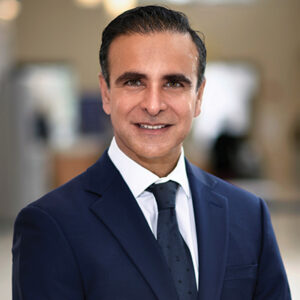
Mohit Khera, MD, MBA, MPH

Mohit Khera, MD, MBA, MPH

Baylor College of Medicine

Houston, Texas

Mohit Khera, MD, MBA, MPH, is a Professor of Urology at Baylor College of Medicine in Houston, Texas, where he holds the F. Brantley Scott Chair in Urology. He additionally serves Baylor College as the Director of the Laboratory for Andrology Research at McNair Medical Institute and the Medical Director of the Executive Health Program. Dr. Khera specializes in male and female sexual dysfunction, men’s health, male infertility, sexual dysfunction, declining testosterone levels in aging men, and hormone replacement therapy. His research interests include studies on the efficacy of botulinum toxin type A in treating Peyronie’s disease, genetic and epigenetic studies of post-finasteride syndrome patients, and testosterone replacement therapy.

Dr. Khera earned his medical degree from the University of Texas Medical School at San Antonio. He then completed his residency in the Scott Department of Urology at Baylor College of Medicine in Houston, Texas, where he subsequently completed a one-year fellowship in Male Reproductive Medicine and Surgery under the guidance of Dr. Larry I. Lipshultz.  

Dr. Khera has authored or co-authored numerous book chapters, including those in the acclaimed Campbell-Walsh Urology textbook, Clinical Gynecology, and the fourth edition of Infertility in the Male. He also co-edited the third edition of the popular book Urology and the Primary Care Practitioner and published Recoupling: A Couple’s 4 Step Guide to Greater Intimacy and Better Sex. Dr. Khera has authored more than 90 articles in scientific journals and has lectured extensively worldwide on testosterone replacement therapy and sexual dysfunction. He is a member of the Sexual Medicine Society of North America, the American Urological Association, the American Society of Andrology, the American Medical Association, the Indian Doctors Association of Houston, the Harris County Medical Society, and the Texas Association of Genitourinary Surgeons. He serves on the Strategy and Development Committee for the International Society for Sexual Medicine and on the Board of Directors for the Society of Urologic Prosthetic Surgeons. 

Talks by Mohit Khera, MD, MBA, MPH

Changing Paradigm in Testosterone Therapy Treatment Options

Mohit Khera, MD, MBA, MPH, Professor of Urology and Director of the Laboratory for Andrology Research at the McNair Medical Institute at Baylor College of Medicine in Houston, Texas, discusses testosterone therapy, focusing on four key topics: oral testosterone, testosterone and COVID-19, testosterone and prostate cancer, and lifestyle modification. Dr. Khera provides a historical context for oral testosterone treatments, noting that the US has only recently seen expansion of this option. He describes the inTUne study which showed that 7% of patients may increase or start hypertension medication while on a testosterone oral therapy, but that overall patients experience a lower rate of erythrocytosis when compared with those receiving injectable and topical forms of testosterone. Dr. Khera then reviews several studies examining the relationship between COVID-19 and testosterone. Early studies showed men were more severely affected by COVID-19 than women. Paradoxically, low serum testosterone may be protective against acquiring COVID-19, but the same low serum testosterone can also result in a more severe outcome if that same patient acquires COVID-19. Additionally, COVID-19 also directly impacts the testicles in that serum testosterone levels significantly decrease from their pre-COVID-19 levels. Transitioning to prostate cancer, Dr. Khera describes the paradigm shift over the past 15 years, with physicians previously viewing testosterone as dangerous to now seeing it as protective. He illustrates the point with a prostate saturation model that shows the non-linear relationship between testosterone, PSA, and prostate size. Dr. Khera then considers treatment options with high levels of testosterone, such as bipolar androgen therapy, that have shown promising results. He concludes with a review of lifestyle modifications that can also improve testosterone levels, such as weight loss, sleep, and varicocele.

Read More
Disease Modification and Erectile Dysfunction: Stem Cells, Shockwave, and PRP

Mohit Khera, MD, MBA, MPH, discusses the shifting paradigms in modern erectile dysfunction (ED) treatment, as reflected by the 2018 American Urological Association ED guidelines. These paradigms focus on shared decision-making, lifestyle modifications, and the concern for cardiovascular risk. He then describes mechanisms of and initial data on experimental regenerative techniques for treating ED, including low-intensity shockwave therapy, stem cell therapy, and platelet-rich plasma (PRP) therapy.

Read More