How to cite: Liss MA. Prostate Cancer Screening Updates and PSA Risk Strategies. Grand Rounds in Urology. March 2026. Accessed Oct 2026. https://grandroundsinurology.com/prostate-cancer-screening-updates-and-psa-risk-strategies/
Summary
Michael A. Liss, MD, PhD, MAS, MBA, FACS, Professor of Urology, University of California, San Diego, San Diego, California, presents updated approaches to prostate cancer screening that move beyond fixed prostate-specific antigen (PSA) thresholds toward individualized, risk-based decision-making. He highlights that prostate cancer remains highly prevalent, necessitating the need to balance early detection with avoidance of overdiagnosis.
Traditional PSA screening led to increased cancer detection but also uncertainty regarding management. Differences between European and United States screening trials created confusion, further compounded by recommendations against screening from the United States Preventive Services Task Force in 2012. This reduction in screening was followed by an increase in metastatic prostate cancer presentations, reinforcing the need for a more balanced approach.
Dr. Liss introduces a risk-adapted PSA framework. Patients with PSA levels below 1 ng/mL, particularly at younger ages, may not require annual testing due to the very low risk of clinically significant disease. For patients aged 45 to 60, a PSA above 2 ng/mL warrants further evaluation, including magnetic resonance imaging (MRI) and urologic referral. For those older than 60, a higher threshold of 3 ng/mL is used to account for age-related prostate enlargement.
He emphasizes that PSA is not a binary test and should not be interpreted as a simple positive or negative result. Instead, screening should incorporate additional variables, including age, family history, race, PSA kinetics, and prostate volume. Risk calculators are presented as practical tools for estimating the likelihood of clinically significant cancer and for guiding decision-making.
Multiparametric MRI has significantly improved diagnostic accuracy, allowing targeted biopsy and reducing unnecessary procedures. Additional tools, such as PSA density and free PSA, further refine risk assessment.
Dr. Liss emphasizes that modern prostate cancer screening relies on individualized risk stratification, selective imaging, and shared decision-making to optimize outcomes while minimizing harm.
About the UCSD Urology Symposium for Primary Care Physicians & Advanced Practice Providers
The UCSD (University of California San Diego) Urology Symposium for Primary Care Physicians & Advanced Practice Providers conference brings together primary care physicians, advanced practice providers, and early-career urology clinicians who play pivotal roles in the urologic care continuum. It features topics such as benign prostatic hyperplasia, overactive bladder, kidney stones, sexual health, and urologic oncology. Through didactic lectures and interactive sessions that highlight the patient journey, the conference educates practitioners on guiding patients and their families toward the most appropriate therapies.
ABOUT THE AUTHOR
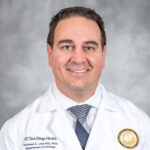
Michael A. Liss, MD, PhD, MAS, MBA, FACS, is a Professor of Urology and the Director of Clinical Trials in the Center for Microbiome Innovation at the University of California, San Diego, San Diego, California. Dr. Liss specializes in genitourinary cancers, including those of the kidney and prostate. His primary research interests include incorporating imaging and biomarker translational research into interventional clinical trials. Dr. Liss is an entrepreneur with three patent applications and the founder of Oncobiomix Inc., which focuses on the development of biomarker-based technologies in medicine.