How to cite: Reiter RE. “Radioligand Therapy Update.” Grand Rounds in Urology. February, 2026. Accessed Oct 2026. https://grandroundsinurology.com/radioligand-therapy-update/
Summary
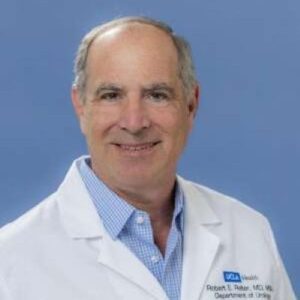
Robert E. Reiter, MD, MBA, Bing Professor of Urologic Oncology and Molecular Biology, University of California, Los Angeles, Los Angeles, California, reviews the current state and future direction of radioligand therapy in prostate cancer, focusing on lutetium-177–PSMA-617 and emerging theragnostic strategies. This radioligand therapy is a targeted approach that combines diagnostic imaging and therapy using the same molecular target, allowing treatment of prostate-specific membrane antigen (PSMA)-expressing disease.
Dr. Reiter discusses the VISION trial, which established lutetium-177–PSMA-617 as a treatment option in metastatic castration-resistant prostate cancer following prior chemotherapy. The study demonstrates significant improvements in radiographic progression-free survival and overall survival compared with the standard of care. Patient selection is based on prostate-specific membrane antigen positron emission tomography (PET) imaging, requiring at least one PSMA-positive lesion without significant PSMA-negative disease.
He highlights that prostate-specific antigen decline and PSMA expression levels correlate with treatment response, with higher uptake associated with improved outcomes. Serial single-photon emission computed tomography imaging may be used to monitor treatment response and guide decisions on treatment duration.
Dr. Reiter reviews the PSMAfore trial, which evaluates radioligand therapy in the pre-chemotherapy setting and demonstrates improved radiographic progression-free survival, although overall survival data remain immature due to crossover. He also presents data from studies in earlier disease states, including metastatic hormone-sensitive prostate cancer and oligometastatic disease, where radioligand therapy combined with stereotactic body radiation therapy improves progression-free survival and delays the need for androgen deprivation therapy.
He emphasizes that disease progression is often driven by new lesions, highlighting the need for improved systemic control. Ongoing research focuses on optimizing sequencing, combination strategies with chemotherapy, poly (ADP-ribose) polymerase (PARP) inhibitors, and immunotherapy, and the development of novel radionuclides such as actinium-225 and alternative targets beyond PSMA.
Dr. Reiter emphasizes that radioligand therapy is rapidly evolving, with expanding indications and multiple strategies under investigation to improve efficacy and durability of response.
The International Prostate Cancer Update (IPCU), is a multi-day, CME-accredited conference focused on new developments in prostate cancer treatment, diagnosis, and prevention. IPCU 36 featured lectures, interactive discussions, panel roundtables, debates, and case reports. This conference is led by expert physicians and is designed for urologists, medical oncologists, radiation oncologists, and other healthcare professionals involved in the diagnosis and treatment of prostate cancer.
The goal of this educational program is to equip healthcare professionals involved in the diagnosis and treatment of prostate cancer with the up-to-date clinical knowledge and tools they need to best treat their patients. The program will discuss the treatment of prostate cancer from diagnosis to treating advanced and metastatic disease. The conference aims to give physicians exposure to a comprehensive review of treating prostate cancer patients and to give them a chance to discuss the issues with peers and experts.
ABOUT THE AUTHOR
Robert E. Reiter, MD, MBA, is the Bing Professor of Urologic Oncology and a Professor of Molecular Biology at the University of California, Los Angeles, Los Angeles, California. Dr. Reiter also serves as the Director of the Prostate Cancer Program and of Urologic Research, as Chief of the Division of Urologic Oncology, and as Co-Director of the Genitourinary Oncology Program for the Jonsson Cancer Center at the University of California, Los Angeles. He is an internationally recognized expert in all areas of prostate cancer management and research. Dr. Reiter has a particular interest in the multidisciplinary management of men with high-risk prostate cancer, incorporating the latest in genomics, clinical trials, and precision medical therapies into treatment plans.