How to cite: Hahn AW. “Treatment after AR Pathway Inhibition (ARPI) + Radioligand Therapy (RLT).” Grand Rounds in Urology. August 2026. Accessed Oct 2026. https://grandroundsinurology.com/treatment-after-ar-pathway-inhibition-arpi-radioligand-therapy-rlt/
Summary
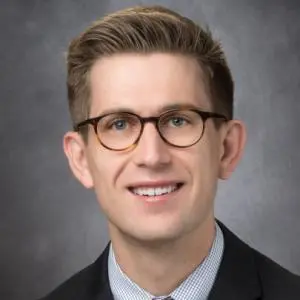
In this presentation from the UroCancer Interdisciplinary Forum 2026, Andrew W. Hahn, MD, Assistant Professor of Genitourinary Medical Oncology, MD Anderson Cancer Center in Houston, Texas, examines treatment selection after progression on androgen receptor pathway inhibition (ARPI) and radioligand therapy (RLT).
Using a clinical case, Dr. Hahn explores sequencing decisions following progression after ARPI. He compares evidence from the PSMAfore and PR.21 studies, highlighting that while PSMAfore demonstrated improved radiographic progression-free survival with lutetium-177 PSMA-617 compared with ARPI switching, PR.21 suggested that administering docetaxel before radioligand therapy may produce superior overall survival compared with the reverse sequence. These findings illustrate the uncertainty surrounding optimal sequencing in contemporary practice.
Dr. Hahn emphasizes that treatment options after ARPI and RLT remain limited. Available therapies include docetaxel, cabazitaxel with or without carboplatin, radium-223 for selected patients, PARP inhibitors for homologous recombination repair-altered disease, and pembrolizumab for tumors with microsatellite instability-high or high tumor mutational burden. He identifies this setting as a major unmet clinical need because responses become less durable, disease biology becomes increasingly heterogeneous, cumulative toxicity increases, and prolonged bone marrow stress limits subsequent treatment options.
Dr. Hahn shares emerging therapeutic strategies, including bispecific T-cell engagers, novel radioligand therapies, molecular glues, androgen receptor degraders, antibody-drug conjugates, and EZH2 inhibitors. He argues that overcoming molecular heterogeneity rather than relying on one-size-fits-all approaches will be essential for improving outcomes in metastatic androgen pathway modulator-resistant prostate cancer.
ABOUT THE AUTHOR

Andrew W. Hahn, MD, is an Assistant Professor of Genitourinary Medical Oncology at the MD Anderson Cancer Center in Houston, Texas. Dr. Hahn’s research focus is to investigate how host factors influence response, resistance, and toxicity to cancer treatments and to design and run clinical trials to improve outcomes for patients with prostate and kidney cancer. His clinical focus is on prostate and kidney cancers.