How to cite: Bilusic M. “Are We Overusing Combination Therapy in mHSPC?” Grand Rounds in Urology. August 2026. Accessed Oct 2026. https://grandroundsinurology.com/are-we-overusing-combination-therapy-in-mhspc/
Summary
In this presentation from the UroCancer Interdisciplinary Forum 2026, Marijo Bilusic, MD, PhD, Genitourinary Medical Oncologist, Sylvester Comprehensive Cancer Center, University of Miami Miller School of Medicine, Miami, Florida, reviews the rapidly evolving treatment landscape for metastatic hormone-sensitive prostate cancer (mHSPC), focusing on whether combination therapy is being appropriately applied in clinical practice. He highlights real-world prescribing data showing that many patients continue to receive androgen deprivation therapy (ADT) alone despite substantial evidence supporting treatment intensification with androgen receptor pathway inhibitors (ARPIs) or triplet therapy.
Dr. Bilusic summarizes evidence from multiple Phase III trials demonstrating improved overall survival with ADT plus ARPI doublets and with triplet regimens incorporating docetaxel. He emphasizes that chemotherapy-containing doublets should generally be replaced by triplet therapy when docetaxel is appropriate, while ARPI doublets remain an effective option for many patients who are not candidates for chemotherapy.
Dr. Bilusic stresses that treatment selection extends beyond clinical trial eligibility, emphasizing factors such as disease burden, metastatic distribution, patient fitness, comorbidities, financial toxicity, insurance coverage, caregiver support, quality of life, and patient preferences. He also reviews the distinct toxicity profiles of available ARPIs and docetaxel, stressing the importance of tailoring treatment to each patient’s clinical circumstances.
Emerging biomarkers that may refine treatment selection are explored, including homologous recombination repair mutations, Speckle-Type POZ Protein mutations, Phosphatase and Tensin Homolog loss, Tumor Protein p53 alterations, Prostate-Specific Antigen response, and cell-free Deoxyribonucleic Acid. Dr. Bilusic argues that prostate cancer represents multiple biologically distinct diseases and that future treatment decisions should increasingly rely on molecular characterization rather than clinical features alone.
ABOUT THE AUTHOR
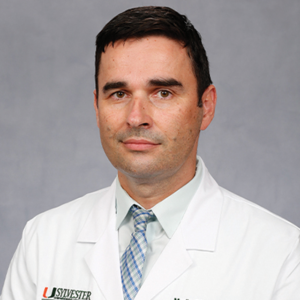
Marijo Bilusic, MD, PhD, is Professor of Clinical Medicine at the University of Miami Miller School of Medicine and a genitourinary medical oncologist at Sylvester Comprehensive Cancer Center in Miami, Florida. He serves as the Genitourinary Medical Oncology Team Lead and specializes in the treatment of genitourinary malignancies including prostate, kidney, bladder, testicular, and adrenal cancers. His research focuses on tumor immunology and the development of novel immunotherapy strategies for prostate cancer and other genitourinary tumors, including therapeutic cancer vaccines, antibodies, immune modulators, and immune checkpoint inhibitors.
Dr. Bilusic earned his medical degree from the University of Zagreb School of Medicine and his PhD from the University of Split School of Medicine in Croatia. He completed a postdoctoral research fellowship in physiological genomics at the Medical College of Wisconsin and a fellowship in hematology and medical oncology at the National Cancer Institute and National Heart, Lung, and Blood Institute. Before joining the University of Miami in 2021, he served at Fox Chase Cancer Center and the National Cancer Institute's Genitourinary Malignancy Branch. At the National Institutes of Health, he also served as Associate Program Director and later as Program Director of the NIH Hematology-Oncology Fellowship Program. Dr. Bilusic is board-certified in medical oncology, hematology, and internal medicine.