David M. Albala, MD, presented “Update on Robotic Prostatectomy PSMA Scanning – Setting up a Program in Your Practice” during the 24th Future Directions in Urology Symposium in August 2024 in Colorado Springs, Colorado.
How to cite: Albala, David M. “Update on Robotic Prostatectomy PSMA Scanning – Setting up a Program in Your Practice.” August 2024. Accessed Oct 2026. https://grandroundsinurology.com/update-on-robotic-prostatectomy-psma-scanning-setting-up-a-program-in-your-practice/
Update on Robotic Prostatectomy PSMA Scanning – Setting up a Program in Your Practice – Summary
David M. Albala, MD, outlines the steps and considerations for establishing a PSMA screening program within a urology practice, emphasizing its potential as a transformative tool for prostate cancer management.
In this 12-minute presentation, Dr. Albala discusses the key considerations for implementing PSMA screening, including regulatory, logistical, and financial planning. Significant capital investment is necessary, and operational logistics—such as proximity to cyclotrons for timely tracer delivery—are vital for efficiency. The practice size and volume of patient referrals also influence the feasibility.
Dr. Albala addresses practicalities like accreditation, insurance reimbursements, and partnerships. Ultimately, PSMA imaging is feasible and advantageous in private practice, offering patients convenient access to advanced diagnostics while underscoring the importance of careful pre-planning to ensure program success.
The Future Directions in Urology Symposium (FDUS) is an annual urology think tank and non-CME educational summit that brings together industry figures and experts to discuss the current state of genitourinary care and define future directions in treatment. Dr. Dreicer delivered this educational activity during the 24th iteration of the meeting in August 2024 in Colorado Springs, Colorado.
ABOUT THE AUTHOR

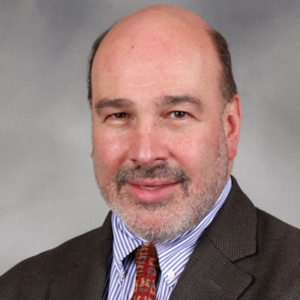
David M. Albala, MD, is a Chief of Urology at Crouse Hospital in Syracuse, New York. Dr. Albala is considered a national and international authority in laparoscopic and robotic urological surgery. His clinical interests include minimally invasive treatments for benign prostatic hypertrophy (BPH), the use of fibrin sealants in surgery, and robotic urologic surgery.
Dr. Albala earned his medical degree at Michigan State University in East Lansing. He completed a residency in Surgery at Dartmouth-Hitchcock Medical Center in Lebanon, New Hampshire. He then completed a fellowship in Endourology at Washington University in St. Louis, Missouri. Under the direction of Ralph V. Clayman, Dr. Albala was part of the team that performed the first laparoscopic nephrectomy in humans.
Dr. Albala is a past White House Fellow (1995-1996), who acted as a special assistant to Federico Peña, Secretary of Transportation, on classified and unclassified public health related issues. He has been a visiting professor at numerous institutions across the United States as well as overseas in countries such as India, China, Iceland, Germany, France, Japan, Brazil, Australia, and Singapore. He has done operative demonstrations in over 32 countries and 23 states. Dr. Albala has over 215 publications in peer-reviewed journals and has authored 3 textbooks in endourology and 4 books in general urology. He is currently the Editor-in-Chief of the Journal of Robotic Surgery and serves on the editorial board for Current Opinions in Urology, Reviews in Urology, and Urology Index and Reviews. In addition, he serves as a reviewer for 8 other surgical journals. He is currently on the Board of Directors of the Large Urology Group Practice Association (LUGPA). Dr. Albala is also currently the Visiting Professor of Urology at SUNY Downstate Health Sciences University, College of Medicine. Dr. Albala has been identified (by a Stanford University-led study) as one of the top 2% of scientists in the world.