How to cite: Sidana A. “Whole Gland Ablation vs. Partial Gland Ablation.” Grand Rounds in Urology. October, 2025. Accessed Oct 2026. https://grandroundsinurology.com/whole-gland-ablation-vs-partial-gland-ablation
Summary
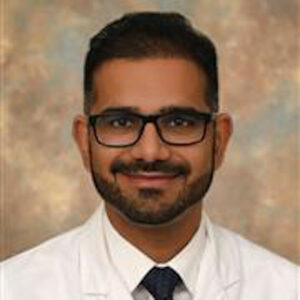
Abhinav Sidana, MD, MPH, FACS, Associate Professor, Surgery, Director, Prostate Cancer Focal Therapy Program, Director, GU Clinical Trials, Co-Director, High-Risk and Advanced Prostate Cancer Clinic, Urologic Oncologist, University of Chicago, Chicago, Illinois, acknowledges that partial gland ablation delivers excellent functional outcomes. However, he notes that focal therapy carries a higher local failure rate than whole gland treatment because clinically significant cancer may persist in the treated zone, missed cancer may remain in untreated areas, and new cancers can arise over time. These risks create a need for ongoing prostate-specific antigen (PSA) testing, imaging, and repeat biopsy, which can become burdensome.
He presents an index case of a seventy-year-old man who undergoes focal irreversible electroporation (IRE) with an uncomplicated course and limited low-grade residual disease, but requires repeated magnetic resonance imaging (MRI) and biopsy. Dr. Sidana asks whether whole gland ablation could provide similar oncologic reassurance with a lower surveillance burden.
He reviews French data in which men with unilateral disease receive focal ablation and those with bilateral disease receive whole gland high-intensity focused ultrasound (HIFU). Partial ablation is the strongest predictor of preserved potency at three and twelve months and produces faster early continence recovery, yet long-term continence is similar. Complications are slightly higher with whole gland ablation, with most events being of low grade.
He then describes his own image-guided series in which whole gland patients are older, have worse baseline sexual function, and have more extensive disease. Whole gland ablation achieves larger and sustained PSA reductions, as well as lower biopsy failure rates, compared with protocol-biopsied partial ablation, acknowledging the potential for selection bias.
A systematic review of focal therapy studies, including cryoablation and (HIFU), reveals long-term biochemical control, cancer-specific survival rates of nearly 98%, and excellent pad-free continence after whole gland ablation. Newer technologies, such as transurethral ultrasound ablation (TULSA)-based whole gland ablation, achieve significant PSA and volume reductions, with continence rates of approximately 96% and erectile function rates of nearly 75%.
Dr. Sidana argues that whole gland ablation is a safe and feasible option for selected men, particularly those with limited interest in potency preservation, those who are poor candidates for surgery or radiation, or those who prefer a one-time ablative procedure with a lower long-term surveillance burden.
Frontiers in Oncologic Prostate Care and Ablative Local Therapy (FOCAL) is an outstanding program on prostate imaging, transperineal interventions, and ablative treatments for prostate cancer and benign prostatic hyperplasia (BPH). Bringing together community-based, academic, and industry partners, FOCAL offers lectures by world-renowned faculty and hands-on training workshops on in-office transperineal interventions, fusion-guided prostate ablation and state-of-the-art BPH management with novel technologies.
ABOUT THE AUTHOR
Abhinav Sidana, MD, MPH, FACS, is an Associate Professor of Surgery, the Director of the Prostate Cancer Focal Therapy Program, the Co-Director of the High-Risk and Advanced Prostate Cancer Clinic, and a Urologic Oncologist at the University of Chicago in Illinois. Dr. Sidana specializes in prostate and kidney cancer, performing both robotic and open surgery for patients diagnosed with urologic cancers. He offers robotic prostatectomy for patients with more aggressive prostate cancer, and performs open and robotic surgery for patients with complex, multifocal, and advanced kidney cancers. Dr. Sidana’s research focuses on providing organ-preserving treatment, with lower side effects, for prostate cancer. He has extensive experience with cryoablation, high-intensity focused ultrasound ablation, TULSA Pro, and irreversible electroporation of the prostate.