Final overall survival results from the EORTC 1333/PEACE-3 trial: Enzalutamide with or without radium-223 in metastatic castration-resistant prostate cancer.
Enrique Gallardo
Overall survival from the phase 2 trial of abiraterone, olaparib, or abiraterone + olaparib in first-line metastatic castration-resistant prostate cancer (mCRPC) with DNA repair defects (BRCAAway).
Maha H. Hussain
How to cite: Yu EY. 2026 GU ASCO Discussant Review: Abstracts Covering the PEACE-3 Trial and BRCAAway Study. Grand Rounds in Urology. Grand Rounds in Urology. February 2026. Accessed Feb 2026. https://grandroundsinurology.com/2026-gu-asco-discussant-review-abstracts-covering-the-peace-3-trial-and-brcaaway-study
Summary
E. David Crawford, MD, Editor-in-Chief of Grand Rounds in Urology and Professor of Urology, University of California, San Diego, San Diego, California, and Evan Yu, MD, Professor of Medicine, Division of Oncology, University of Washington, Seattle, Washington discuss two important ASCO GU presentations in metastatic castration-resistant prostate cancer, focusing on survival outcomes, sequencing considerations, and patient selection in combination strategies.
Dr. Yu first reviews final overall survival data from the PEACE-3 trial evaluating enzalutamide plus radium-223 versus enzalutamide alone. The study demonstrates a median overall survival benefit of 5.6 months with combination therapy. Radium has historically been reserved for later-line, symptomatic disease, and current guidelines reflect limited prior exposure to androgen receptor pathway inhibitors (ARPIs) in the trial population. Dr. Yu emphasizes that the combination may be most relevant for patients who have previously received abiraterone, as enzalutamide maintains response rates in that setting. Sequencing considerations are addressed, including whether prior radium limits subsequent lutetium-177 PSMA-617 therapy. Registry data suggest acceptable myelotoxicity and preserved survival outcomes when lutetium follows radium.
The discussion shifts to the BRCAAway study evaluating abiraterone plus olaparib versus monotherapy in BRCA-altered mCRPC. The trial reports a median overall survival of 68 months in the combination arm. Although the study is small and subject to baseline imbalances, Dr. Yu views the findings as supportive of existing evidence from larger trials demonstrating a survival benefit with ARPI and poly (ADP-ribose) polymerase (PARP) inhibitor combinations.
Dr. Yu stresses that combination therapy is not appropriate for all patients due to toxicity considerations, including fatigue, gastrointestinal effects, and myelosuppression. He highlights the need for improved clinical and molecular tools to identify patients who require aggressive combination therapy versus those who may benefit from monotherapy.
ABOUT THE AUTHOR
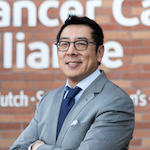
Evan Y. Yu, MD, is a medical oncologist specializing in prostate, bladder, and testicular cancer treatment and research. He graduated Alpha Omega Alpha from the University of Washington School of Medicine. He completed internal medicine residency at the Brigham and Women’s Hospital and oncology fellowship and post-doctoral training at the Dana-Farber Cancer Institute. He returned to Seattle at the end of 2004 to join the faculty at the University of Washington and Fred Hutchinson Cancer Research Center. He now is a Full Professor, the Clinical Research Director for GU malignancies, Core Director for the Pacific Northwest Prostate Cancer SPORE and co-PI of the DoD Prostate Cancer Clinical Trials Consortium at his institution. His research focuses on testing the next wave of novel molecular targeted therapies and immunotherapy techniques, with a complementary focus on imaging biomarkers. In addition to an active clinical and research practice, he also is the Medical Director for Clinical Research Services at the Fred Hutchinson Cancer Consortium. He served as a Hematology/Oncology Fellowship Program Director for a decade at the Fred Hutchinson Cancer Research Center. He has regularly been voted a “Top Doctor” by Castle Connolly, U.S. News and World Report, Seattle magazine, and Seattle Met magazine. He has served for many years on the National Cancer Institute Genitourinary Cancers Steering Committee and is newly appointed as the Co-Chair for the National Cancer Institute Prostate Cancer Task Force. He remains active in SWOG and he also serves as an editor for Clinical Cancer Research, Clinical Genitourinary Cancer, and Uro-Today.