How to cite: Prasad V. “PSMA-Targeted Therapy – Clonal Heterogeneity, Neuroendocrine Differentiation, and Finding the Right Sequence of Systemic Treatment.” Grand Rounds in Urology. September 15, 2025. Accessed Jan 2026. https://grandroundsinurology.com/psma-targeted-therapy-clonal-heterogeneity-neuroendocrine-differentiation-and-finding-the-right-sequence-of-systemic-treatment/
Summary
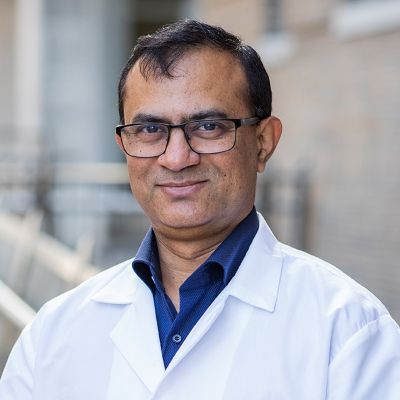
Vikas Prasad, MD, PhD, Associate Professor, Washington University School of Medicine, St. Louis, Missouri, highlights the complexity of prostate cancer biology and the clinical challenges posed by heterogeneity in tumor cell populations. He emphasizes that while PSMA-targeted therapies have shown promise, variability in PSMA expression across different tumor clones may limit uniform treatment response. Dr. Prasad underscores the importance of identifying patients whose disease biology is most amenable to PSMA-based approaches.
Dr. Prasad addresses neuroendocrine differentiation as a mechanism of treatment resistance, noting that this phenotype can emerge during disease progression and may lead to reduced efficacy of PSMA-targeted agents. The integration of molecular imaging, histopathology, and molecular profiling may provide a better understanding of disease biology and inform therapeutic selection.
Dr. Prasad also discusses sequencing of systemic therapies, including the need to evaluate the timing of PSMA-targeted approaches relative to chemotherapy, androgen receptor-targeted agents, and other novel theranostics. He highlights that the clinical context, prior exposure, and molecular characteristics of the tumor should inform sequencing decisions.
Dr. Prasad emphasizes the importance of ongoing clinical trials to clarify optimal sequencing strategies, address mechanisms of resistance, and refine patient selection criteria. He notes that advancing theranostics requires collaboration across nuclear medicine, oncology, and molecular biology disciplines to translate early data into clinical benefit.
The Global Summit on Precision Diagnosis and Treatment of Prostate Cancer is a unique multi-disciplinary forum organized to inform the key health care stakeholders about the emerging advances in clinical case and research and create a consensus-based vision for the future of precision care and educational and research strategy for its realization. The mission of the Summit is to fill the currently existing gap between the key experts of in vivo imaging, the world authorities in the in vitro fluid- and tissue-based molecular diagnostics, including genomics, and thought leaders in the development of novel observation strategies (e.g., active surveillance, or AS) and therapeutic interventions.