This content is available free to the GRU Community. Login or create an account to view it.
How to cite: Salmasi A. “Combined Modality Therapy for Localized Urothelial Carcinoma.” December 2025. Accessed Apr 2026. https://grandroundsinurology.com/combined-modality-therapy-for-localized-urothelial-carcinoma/
Summary
Amirali Salmasi, MD, MSCR, Associate Professor of Urology, University of California, San Diego, San Diego, California, reviews the evidence supporting trimodality therapy as an organ-preserving strategy for localized muscle-invasive bladder cancer and outlines efficacy, tolerability, patient selection, and unresolved clinical questions.
Radical cystectomy remains effective but carries substantial morbidity. Trimodality therapy, consisting of transurethral resection followed by chemoradiation, is now included in national guidelines as a Category 1 option for selected patients.
The BC2001 phase III trial demonstrated improved locoregional and invasive locoregional control with chemoradiation compared with radiation alone. Although survival endpoints showed trends favoring chemoradiation, differences were not statistically significant. Five-year cystectomy rates were lower with chemoradiation.
Retrospective multi-institutional and population-based studies comparing cystectomy and trimodality therapy demonstrate similar cancer-specific outcomes, with some analyses suggesting improved overall survival in the bladder preservation cohort. Salvage cystectomy, performed in a subset of patients, preserves cancer-specific survival.
Quality-of-life data indicate transient worsening of symptoms at treatment completion, with recovery by six months in most domains. Approximately one-third of patients experience persistent bladder symptoms worsening. Chemotherapy addition does not worsen overall health-related quality of life.
Dr. Salmasi emphasizes careful patient selection and outlines future questions regarding maximal resection, integration of systemic therapy, radiation strategy, surveillance, and adjuvant approaches.
About the 2025 International Bladder Cancer Update Expert Forum™
ABOUT THE AUTHOR
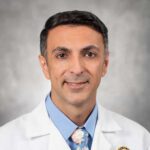
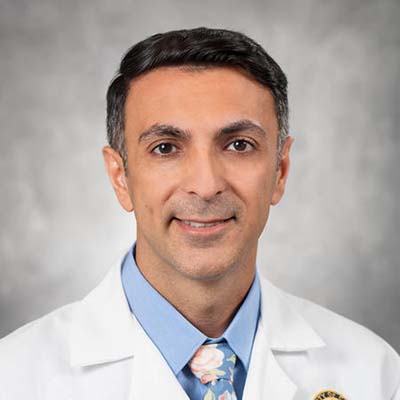
Amirali Salmasi, MD, MSCR, is a urologist and an Associate Professor of Urology at the University of California, San Diego. Dr. Salmasi specializes in the management of genitourinary cancers in men and women, including bladder, prostate, kidney, ureteral, testicular, adrenal, and penile cancers. He performs advanced minimally invasive and complex open surgeries, such as robotic-assisted laparoscopic cystectomy, nerve-sparing prostatectomy, retroperitoneal lymph node dissection, adrenalectomy, and partial nephrectomy.