How to cite: Badal J. Active Surveillance for Prostate Cancer: Practical Update for the Practicing Urologist. Grand Rounds in Urology. September 19, 2025. Accessed Feb 2026. https://grandroundsinurology.com/active-surveillance-for-prostate-cancer-practical-update-for-the-practicing-urologist-2/
Summary
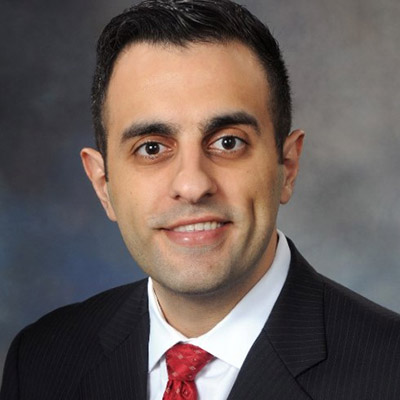
Justin Badal, MD, Assistant Professor of Urology, Baylor College of Medicine, Houston, Texas, reviews modern approaches to active surveillance (AS) for men with low- and favorable intermediate-risk prostate cancer, focusing on precise patient selection, follow-up strategies, and integration of magnetic resonance imaging (MRI) and genomic testing. He underscores that AS allows deferral of definitive treatment while maintaining cancer control, reducing overtreatment for organ-confined, indolent disease.
According to the National Comprehensive Cancer Network 2025 guidelines, AS remains the preferred management for low-risk prostate cancer with life expectancy >10 years and may be considered for selected favorable intermediate-risk patients. Dr. Badal outlines key prognostic factors, including prostate-specific antigen (PSA) density, number of positive cores, body mass index, and PSA kinetics, and stresses the need for caution with cribriform or intraductal histology, which portend poorer outcomes.
He highlights the role of multiparametric MRI and the Prostate Cancer Radiological Estimation of Change in Sequential Evaluation (PRECISE) score, a 5-point system that standardizes the interpretation of MRI. PSA density thresholds and genomic classifiers, including DecipherⓇ, Oncotype DXⓇ, PolarisⓇ, and ArteraAI, provide individualized predictions of metastasis and disease progression risk.
Dr. Badal argues that these advanced tools improve shared decision-making for borderline AS candidates. Integrating MRI, PSA kinetics, and genomics personalizes AS, balancing oncologic safety with quality of life.
About The 29th Annual Innovations in Urologic Practice:
Presented by co-chairs Mohit Khera, MD, MBA, MPH, and Michael Coburn, MD, FACS, the Innovations in Urologic Practice conference provides a detailed review and commentary on multiple genitourinary and urologic diseases. Among the featured oncological topics are bladder cancer and immunotherapies, as well as upper tract cancer management, prostate cancer, including state-of-the-art imaging, focal therapy, and MRI. Experts also discuss new tools and techniques for nephrectomy and treating advanced renal cell carcinoma. In terms of general urological approaches, the conference also includes pelvic reconstruction and trauma, men’s health topics like male infertility and sexual dysfunction, and ways to diagnose and treat infections in the urology patient.
For further educational activities from this conference, visit our collection page.
ABOUT THE AUTHOR

Justin J. Badal, MD, is a urologic surgeon and the Assistant Professor of Urology at Baylor College of Medicine in Houston, Texas. Dr. Badal has clinical interests in managing prostate and kidney cancers with minimally invasive techniques. His research interests focus on the cross-section of medicine and emerging technologies, including the development of advanced robotic skills to remain at the forefront of medical education and oncologic care for genitourinary malignancies.