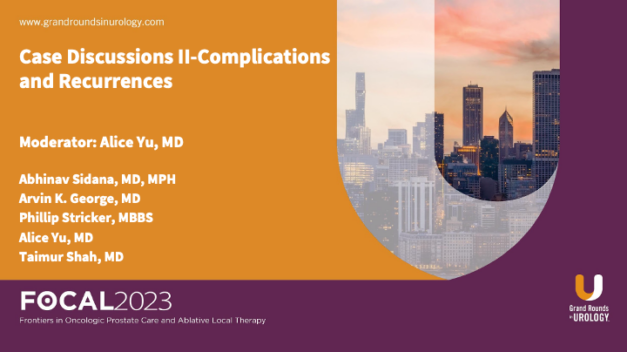
Case Discussions II-Complications and Recurrences
Abhinav Sidana, MD, MPH; Arvin K. George, MD; Phillip Stricker, MBBS; Taimur T. Shah, MD; Alice Yu, MD; and Thomas Frye, DO;
Read More
Abhinav Sidana, MD, MPH; Arvin K. George, MD; Phillip Stricker, MBBS; Taimur T. Shah, MD; Alice Yu, MD; and Thomas Frye, DO;
Read More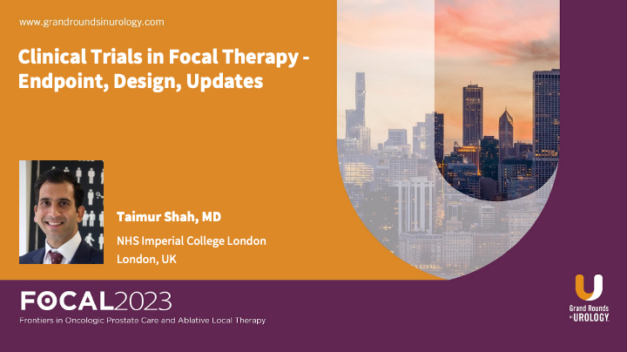
Taimur Shah, MD, provides an in-depth analysis of clinical trials in focal therapy for prostate cancer, focusing on endpoints, design, and recent updates.
Dr. Shah emphasizes the importance of carefully defined endpoints in clinical trials for focal therapy, including oncologic control measures such as progression-free survival, biochemical recurrence rates, and cancer-specific mortality. Secondary endpoints typically assess functional outcomes, including urinary continence and sexual function, to gauge the impact on patients’ quality of life. These criteria are crucial for determining the effectiveness and safety of focal therapy compared to traditional treatments.
The design of clinical trials in focal therapy is discussed in detail. Dr. Shah highlights the need for robust methodologies, including randomized controlled trials (RCTs) and prospective cohort studies. He discusses the latest data on various focal therapy modalities, including high-intensity focused ultrasound (HIFU), cryoablation, and photodynamic therapy.
The presentation also addresses the challenges and limitations of current clinical trials. These include the need for standardized treatment protocols, variability in imaging and biopsy techniques, and the difficulty of conducting long-term follow-ups. Dr. Shah emphasizes the importance of continued research and collaboration among institutions to overcome these challenges and refine focal therapy approaches.
Read More