How to cite: Ehdaie B. Case Discussions: Cases I Try to Avoid. Grand Rounds in Urology. February 2026. Accessed Oct 2026. https://grandroundsinurology.com/case-discussions-cases-i-try-to-avoid/
Summary
Behfar Ehdaie, MD, MPH, Memorial Sloan Kettering Cancer Center, New York, New York, presents case-based examples illustrating clinical situations in which focal therapy for prostate cancer may be inappropriate due to anatomic constraints, tumor location, or risk of inadequate treatment margins.
He focuses on four clinical cases that highlight challenges in selecting patients for focal therapy. Dr. Ehdaie explains that careful patient selection remains essential because limitations in energy delivery, treatment margins, and tumor location can lead to inadequate cancer control or increased functional complications.
The first case describes a patient with grade group 2 prostate cancer detected on MRI-targeted and systematic biopsy. The lesion lies posteriorly near the urethra. Dr. Ehdaie explains that focal treatment in this location may be technically challenging because available technologies, such as cryotherapy and high-intensity focused ultrasound, cannot safely deliver sufficient energy near the urethra. Catheter placement and energy limitations reduce treatment effectiveness in periurethral areas, making focal therapy a poor option in such cases. The possibility of capsular involvement and clinical T3 disease further increases the risk of recurrence.
The second case demonstrates an apical lesion. The apex contains the neurovascular bundle, vascular structures, and the urinary sphincter, which limits treatment margins. Maintaining a minimum distance from the sphincter is necessary to preserve urinary function, but this restriction can compromise oncologic treatment margins. For this reason, Dr. Ehdaie notes that apical tumors are often less suitable for focal therapy.
The third case involves an anterior tumor with significant tumor volume. Treatment feasibility depends on the focal therapy modality and its ability to reach the lesion while maintaining appropriate margins. Cryotherapy may be considered in selected situations, but involvement of the urethra or bladder neck can increase treatment risk and functional complications.
The final case highlights disease with possible extracapsular extension. Clinical T3 disease is associated with a higher risk of recurrence after focal therapy. Dr. Ehdaie emphasizes that periurethral lesions, apical tumors, and tumors with suspected extracapsular extension are among the most difficult situations for focal therapy and often require alternative treatment approaches.
The International Prostate Cancer Update (IPCU), is a multi-day, CME-accredited conference focused on new developments in prostate cancer treatment, diagnosis, and prevention. IPCU 36 featured lectures, interactive discussions, panel roundtables, debates, and case reports. This conference is led by expert physicians and is designed for urologists, medical oncologists, radiation oncologists, and other healthcare professionals involved in the diagnosis and treatment of prostate cancer.
The goal of this educational program is to equip healthcare professionals involved in the diagnosis and treatment of prostate cancer with the up-to-date clinical knowledge and tools they need to best treat their patients. The program will discuss the treatment of prostate cancer from diagnosis to treating advanced and metastatic disease. The conference aims to give physicians exposure to a comprehensive review of treating prostate cancer patients and to give them a chance to discuss the issues with peers and experts.
ABOUT THE AUTHOR

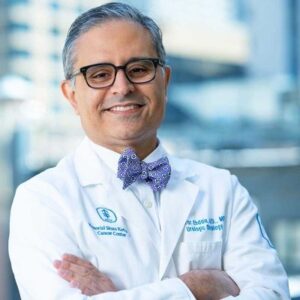
Behfar Ehdaie, MD, MPH, is an Associate Attending Surgeon at Memorial Sloan Kettering Cancer Center in New York, New York. Dr. Ehdaie is an expert in minimally invasive surgical techniques for the treatment of urologic cancers and has a particular interest in novel management of prostate cancer, kidney tumors, and bladder cancer. He performs more than 200 minimally invasive prostate surgeries each year and is experienced in performing extensive lymph node removals at the time of prostate surgery.