How to cite: Ehdaie B. Focal Therapy Update: Selection, Outcomes, Trials. Grand Rounds in Urology. February 2026. Accessed Oct 2026. https://grandroundsinurology.com/focal-therapy-update-selection-outcomes-trials/
Summary
Behfar Ehdaie, MD, MPH, Associate Attending Surgeon, Memorial Sloan Kettering Cancer Center, New York, New York, examines whether focal therapy should be considered a standard treatment strategy for localized prostate cancer and reviews the clinical evidence, patient selection principles, and functional outcomes associated with focal therapy.
Dr. Ehdaie begins by framing the ongoing debate regarding focal therapy and its potential role in prostate cancer management. A central question is whether focal therapy should be incorporated into major treatment guidelines. He notes that other management strategies, including active surveillance and robotic prostatectomy, were adopted before extensive randomized evidence was available. This highlights how treatment approaches often evolve alongside emerging data and technological advances.
He reviews clinical evidence supporting focal therapy. Randomized and prospective studies evaluating focal treatment approaches, including photodynamic therapy and high-intensity focused ultrasound, demonstrate that focal therapy can reduce progression to definitive treatment in selected patients. Prospective trials evaluating magnetic resonance imaging (MRI) -guided focal therapy also show effective elimination of clinically significant cancer within treated regions while maintaining favorable functional outcomes.
Dr. Ehdaie emphasizes that focal therapy may address a clinical gap between active surveillance and radical therapy. Improvements in (MRI) and targeted biopsy techniques now allow clinicians to better localize prostate tumors and map disease within the prostate gland. These advances enable more precise treatment planning and have increased interest in treatment options that target only the cancerous portion of the prostate.
Observational registry studies and longer-term follow-up data suggest that many patients treated with focal therapy avoid whole-gland treatment for several years. Dr. Ehdaie notes that treatment technique also influences outcomes, with wider treatment margins and higher thermal doses improving cancer control without compromising urinary or sexual function.
Dr. Ehdaie emphasizes the importance of careful patient selection. Candidates for focal therapy typically have grade group 2 or 3 disease localized to a single MRI-visible lesion without evidence of extraprostatic extension. Continued prospective studies and outcome monitoring remain essential as focal therapy technologies continue to evolve.
The International Prostate Cancer Update (IPCU), is a multi-day, CME-accredited conference focused on new developments in prostate cancer treatment, diagnosis, and prevention. IPCU 36 featured lectures, interactive discussions, panel roundtables, debates, and case reports. This conference is led by expert physicians and is designed for urologists, medical oncologists, radiation oncologists, and other healthcare professionals involved in the diagnosis and treatment of prostate cancer.The goal of this educational program is to equip healthcare professionals involved in the diagnosis and treatment of prostate cancer with the up-to-date clinical knowledge and tools they need to best treat their patients. The program will discuss the treatment of prostate cancer from diagnosis to treating advanced and metastatic disease. The conference aims to give physicians exposure to a comprehensive review of treating prostate cancer patients and to give them a chance to discuss the issues with peers and experts.
ABOUT THE AUTHOR

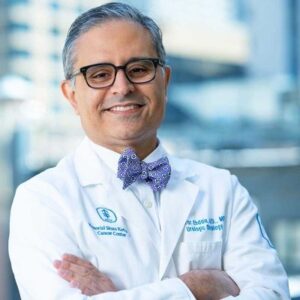
Behfar Ehdaie, MD, MPH, is an Associate Attending Surgeon at Memorial Sloan Kettering Cancer Center in New York, New York. Dr. Ehdaie is an expert in minimally invasive surgical techniques for the treatment of urologic cancers and has a particular interest in novel management of prostate cancer, kidney tumors, and bladder cancer. He performs more than 200 minimally invasive prostate surgeries each year and is experienced in performing extensive lymph node removals at the time of prostate surgery.