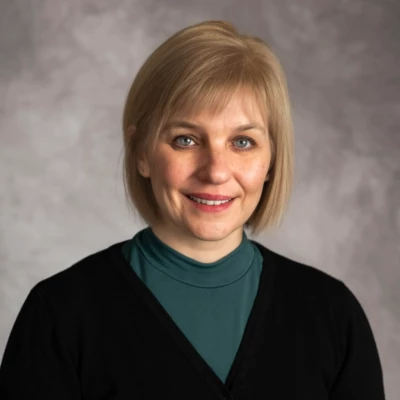
Hillary Durstein MSN, APRN, NP-C, CUNP, FAUNA, presents “Foley Catheter Placement for Adult Patients.”
How to cite: Durstein, Hillary. “Foley Catheter Placement for Adult Patients.” March 28, 2025. Accessed Mar 2026. https://grandroundsinurology.com/foley-catheter-placement-for-adult-patients/
Foley Catheter Placement for Adult Patients – Summary
Hillary Durstein MSN, APRN, NP-C, CUNP, FAUNA, provides a comprehensive overview of indwelling Foley catheter use. In this 9-minute presentation, Durstein focuses on clinical indications, insertion techniques, and troubleshooting difficult anatomy. She includes images, graphics, and X-rays in this educational presentation.
Durstein underscores how common catheterization is in both hospital and outpatient settings. It is typically used for surgical recovery, urinary retention, bladder outlet obstruction, and continuous bladder irrigation, as well as in patients with significant mobility limitations, epidurals, pressure ulcers, or end-of-life care. She stresses the importance of evaluating whether a Foley catheter is truly necessary. Alternatives such as external collection devices and intermittent catheterization may be appropriate. Clinical risks of overuse are discussed.
A step-by-step guide to male catheterization is provided, emphasizing patient comfort, adequate lubrication, and correct anatomical positioning. She details key landmarks, such as the prostate and urethral segments, that can complicate insertion. Proper technique involves advancing the catheter to the hub and confirming urine return before balloon inflation. Applying suprapubic pressure or irrigating with saline is advised when urine return is not visible.
The discussion also covers complications such as BPH, strictures, phimosis, obesity, and rare conditions like hypospadias or artificial urinary sphincters. In these cases, catheter selection is critical. Durstein recommends upsizing to an 18 or 20 French catheter rather than downsizing when encountering resistance from an enlarged prostate. For strictures, smaller sizes or specialized kits may be necessary, and in challenging cases, bedside cystoscopy or suprapubic catheter placement may be indicated.
ABOUT THE AUTHOR

Hillary Durstein, MSN, APRN, NP-C, CUNP, FAUNA, is a Nurse Practitioner with the rank of Major in the United States Army Reserve, currently serving in Las Vegas, Nevada. Durstein leads the Advanced Prostate Cancer Clinic for the US Army Reserve, and serves as a remote educator of Oncology Nursing for Bayer.