How to cite: Sidana A. “Genetic Testing in Prostate Cancer Management.” Grand Rounds in Urology. October, 2025. Accessed Mar 2026. https://grandroundsinurology.com/genetic-testing-in-prostate-cancer-management-2/
Summary
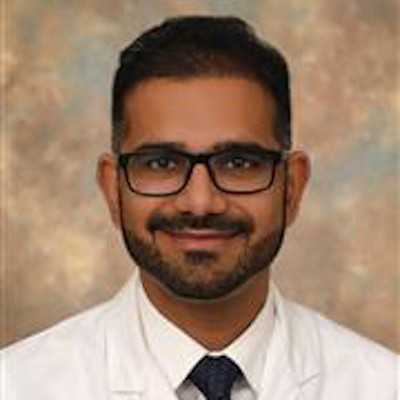
Abhinav Sidana, MD, MPH, FACS, Associate Professor of Surgery, Director, Prostate Cancer Focal Therapy Program, Director, GU Clinical Trials, Co-Director, High-Risk and Advanced Prostate Cancer Clinic, University of Chicago, Chicago, Illinois, describes the role of genetic testing across the spectrum of prostate cancer. Dr. Sidana explains that the use of germline and somatic testing has expanded as evidence links specific alterations with inherited risk, treatment selection, and family counseling. He shares that germline testing identifies inherited mutations such as BRCA1, BRCA2, ATM, CHEK2, and HOXB13, noting that these alterations influence both future screening and cascade testing among relatives. Somatic testing identifies tumor-specific changes that guide targeted therapy.
Dr. Sidana explains that patients with metastatic prostate cancer benefit from germline testing at diagnosis because some alterations carry prognostic significance and may inform therapy. He notes that BRCA2 mutations are associated with aggressive disease and a higher risk for early-onset cancer. He also highlights that germline testing supports conversation with family members who may have elevated risk.
Dr. Sidana reviews the role of somatic testing in guiding therapy. He explains that homologous recombination repair alterations, such as BRCA1, BRCA2, and ATM, may increase sensitivity to poly(ADP-ribose) polymerase (PARP) inhibition. He states that microsatellite instability or mismatch repair deficiency may make patients eligible for immunotherapy. He also notes that later-stage disease may acquire additional mutations that influence treatment decisions.
Dr. Sidana emphasizes that testing should be timed to clinical needs. He states that germline testing is relevant for metastatic disease at diagnosis, while somatic testing is often most useful in castration resistant disease. He encourages clinicians to prepare patients for testing by discussing potential implications for therapy, prognosis, and family risk. Dr. Sidana highlights that genetic testing enhances personalized treatment and supports informed decision-making in prostate cancer care.
Frontiers in Oncologic Prostate Care and Ablative Local Therapy (FOCAL) is an outstanding program on prostate imaging, transperineal interventions, and ablative treatments for prostate cancer and benign prostatic hyperplasia. Bringing together community-based, academic, and industry partners, FOCAL offers lectures by world-renowned faculty and hands-on training workshops on in-office transperineal interventions, fusion-guided prostate ablation and state-of-the-art BPH management with novel technologies.
ABOUT THE AUTHOR

Abhinav Sidana, MD, MPH, FACS, is an Associate Professor of Surgery, the Director of the Prostate Cancer Focal Therapy Program, the Co-Director of the High-Risk and Advanced Prostate Cancer Clinic, and a Urologic Oncologist at the University of Chicago in Illinois. Dr. Sidana specializes in prostate and kidney cancer, performing both robotic and open surgery for patients diagnosed with urologic cancers. He offers robotic prostatectomy for patients with more aggressive prostate cancer, and performs open and robotic surgery for patients with complex, multifocal, and advanced kidney cancers. Dr. Sidana’s research focuses on providing organ-preserving treatment, with lower side effects, for prostate cancer. He has extensive experience with cryoablation, high-intensity focused ultrasound ablation, TULSA Pro, and irreversible electroporation of the prostate.