How to cite: Monga MJ. “Is Shock Wave Lithotripsy Dead?” Grand Rounds in Urology. November 13, 2025. Accessed Feb 2026. https://grandroundsinurology.com/is-shock-wave-lithotripsy-dead/
Summary
Manoj J. Monga, MD, FACS, FRCS, Professor and Chair, Department of Urology, University of California, San Diego, San Diego, California, presents a data-driven, patient-centered case for shock wave lithotripsy (SWL) as a relevant and valuable treatment for urinary stone disease. Dr. Monga argues that (SWL) is not dead, but instead requires improved patient selection, optimized technique, and thoughtful counseling to achieve durable success.
Dr. Monga explains why (SWL) continues to appeal to patients and physicians despite lower stone-free rates than ureteroscopy. Randomized trials demonstrate that although ureteroscopy achieves higher immediate stone-free rates, patients treated with SWL report shorter recovery times and are significantly more willing to undergo the procedure again. Emergency department revisit rates are also lower with SWL compared with ureteroscopy, reinforcing its value as a less invasive option.
Dr. Monga emphasizes that appropriate patient selection is the cornerstone of success. Computed tomography is essential for decision-making, as ultrasound cannot reliably assess stone size, density, skin-to-stone distance, lower pole anatomy, or impaction. He introduces the “rule of 12s” to identify ideal candidates for SWL: stone size less than 12 millimeters, stone density less than 1200 Hounsfield units, skin-to-stone distance less than 12 centimeters, and non–lower pole location. As these parameters worsen, success rates decline, and patients should be counseled accordingly.
He reviews predictors of stone impaction, including measurement of Hounsfield units beneath the stone. Technical refinements are discussed in detail. Proper coupling is critical, as even small air pockets can dramatically reduce fragmentation. Voltage stepping, a brief pause after initial shocks, and slower shock rates improve fragmentation while reducing renal injury. General anesthesia and gated shock delivery further enhance outcomes.
Dr. Monga stresses that SWL should generally be performed without ureteral stents. Medical expulsive therapy with alpha blockers before and after treatment improves stone passage, particularly for larger stones.
Dr. Monga argues that shock wave lithotripsy remains an important option, particularly for well-selected patients, and will continue to play a role as technology and technique evolve.
About the 32nd Annual Perspectives in Urology: Point Counterpoint conference: Presented by Program Chair and Grand Rounds in Urology Editor-in-Chief E. David Crawford, MD, this conference brought together leading experts in urology, medical oncology, and radiation oncology to discuss and debate the latest topics in genitourinary cancers, primarily prostate cancer and bladder cancer. This interactive conference offered topical lectures, pro/con debates, interesting-case presentations, interactive panel discussions, and interactive audience and faculty networking.
ABOUT THE AUTHOR
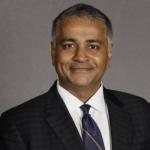
Manoj J. Monga, MD, FACS, FRCS, is a Professor and the Chair of the Department of Urology at the University of California, San Diego, where he oversees the department’s research, teaching, and clinical care. He is recognized as an international authority in endourology (minimally invasive urologic surgery) and kidney stone disease. His clinical expertise includes kidney stone prevention, medical and surgical management of kidney stone disease, and endoscopic management of upper tract transitional cell cancer and benign strictures.