How to cite: Dreicer R. Perioperative Chemotherapy for Upper Tract Urothelial Cancer. Grand Rounds in Urology. November 2025. Accessed Jan 2026. https://grandroundsinurology.com/perioperative-chemotherapy-for-upper-tract-urothelial-cancer-2/
Summary
Robert Dreicer, MD, MS, MACP, FASCO, Professor of Medicine and Urology, University of Virginia School of Medicine, Charlottesville, Virginia, discusses recent data shaping the management of upper tract urothelial cancer (UTUC) in the perioperative setting. He introduces the topic by noting that advances in systemic therapy are transforming urothelial cancer care and predicts that future discussions will soon shift away from conventional chemotherapy.
Dr. Dreicer provides historical context, explaining that for decades, perioperative treatment decisions for upper tract disease were largely extrapolated from bladder cancer data due to limited patient numbers. Retrospective studies have suggested a modest or no benefit from adjuvant chemotherapy, although meta-analyses have hinted at improved outcomes with cisplatin-based regimens. He stresses a key pharmacologic distinction: cisplatin remains a potentially curative drug, while carboplatin is palliative and not equivalent in urothelial malignancies.
He focuses on the POUT trial, a pivotal randomized study of 261 patients with high-risk UTUC. Eligibility required an estimated glomerular filtration rate above 50 for cisplatin, yet 21 percent of patients assigned to cisplatin switched to carboplatin, making it effectively a carboplatin-heavy trial. Despite this, POUT demonstrated statistically significant improvements in both disease-free and overall survival, confirming a benefit from platinum-based adjuvant chemotherapy. Five-year follow-up data have maintained these results.
Dr. Dreicer notes that while some high-volume centers preferred neoadjuvant cisplatin due to better renal function before nephroureterectomy, this approach was rarely implemented. In practice, most patients still received postoperative therapy once high-risk or node-positive pathology was identified.
He also references EV-302, a trial evaluating enfortumab vedotin plus pembrolizumab in advanced urothelial cancer. EV-302 included upper tract patients and demonstrated equivalent efficacy in this subgroup, foreshadowing a paradigm shift toward antibody-drug conjugate–based regimens in both metastatic and perioperative settings.
ABOUT THE AUTHOR

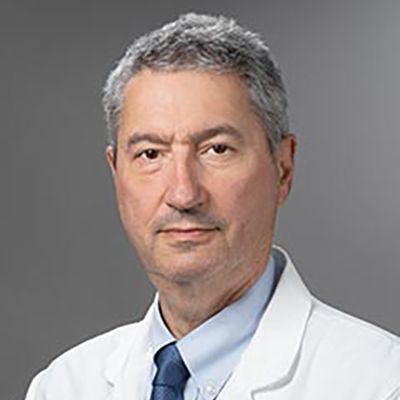
Robert Dreicer, MD, MS, MACP, FASCO, is the Deputy Director and Associate Director of Clinical Research for the Cancer Center, Section Head of Solid Tumor Oncology within the School of Medicine’s Division of Hematology and Oncology, a Professor of Medicine and Urology, and the Co-Director of the Mellon Institute at the University of Virginia in Charlottesville, Virginia. Dr. Dreicer specializes in the management of genitourinary malignancies, as well as the design and conduct of clinical trials in urologic oncology. Dr. Dreicer’s research interests are in novel therapeutic approaches for urologic cancers including prostate, urothelial and kidney cancers.