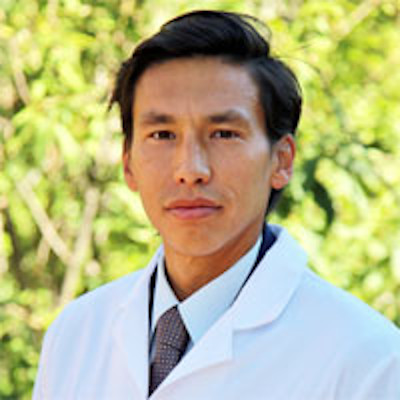
Jeremie Calais, MD, MSc, presented “PET Imaging for Selection of Focal Therapy Candidates” during the 2022 Frontiers in Oncologic Prostate Care and Ablative Local Therapy symposium on September 23, 2022, in Los Angeles, California.
How to cite: Calais, Jeremie. “PET Imaging for Selection of Focal Therapy Candidates.” September 23, 2022. Accessed Feb 2026. https://grandroundsinurology.com/pet-imaging-for-selection-of-focal-therapy-candidates/
PET Imaging for Selection of Focal Therapy Candidates – Summary
Jeremie Calais, MD, MSc, Associate Professor of Nuclear Medicine and Theranostics in the Department of Molecular and Medical Pharmacology at UCLA, discusses PSMA, or Prostate Specific Membrane Antigen. He explains that PSMA PET imaging is a game-changing prostate cancer imaging biological target that can create imaging of prostate cancer cells. The level of overexpression is 100 to 1000 times higher than normal levels. Recent 2018, 2019, and 2020 studies, along with many others, have proven that PSMA PET is more sensitive and specific than other imaging modalities at detecting and localizing prostate cancer at the whole body level. He explains that its key strength is to detect nodal and distant metastatic disease, which allows physicians to detect earlier and more accurate disease staging. Dr. Calais continues to state that the research PSMA injection Gallium GA 68 PSMA-11 was approved in December 2020. Other commercial options followed, such as Piflufolastat F 18 and PSMA 11 in 2021. Studies have shown PSMA PET to be helpful for upstaging disease at more advanced stages such as T2c, T3a, and T3b. Dr. Calais states that when the PSMA PET signal is higher, it indicates a more aggressive disease. MRI and PSMA PET together can give a more comprehensive vision of prostate cancer cells within and outside of the prostate. There are success stories of PSMA PET results defining targeting information where an MRI-guided biopsy failed. He concludes by reviewing case studies of PSMA PET with cryotherapy or HIFU.
The annual symposium on Frontiers in Oncologic Prostate Care and Ablative Local Therapy (FOCAL) is an outstanding program on prostate imaging, transperineal interventions, and ablative treatments for prostate cancer and benign prostatic hyperplasia. Bringing together community-based, academic, and industry partners, FOCAL offers lectures by world-renowned faculty and hands-on training workshops on in-office transperineal interventions, fusion-guided prostate ablation and state-of-the-art BPH management with novel technologies. For more educational activities from the symposium that took place from September 23-24, 2022 in Los Angeles, California, visit our collection page.
ABOUT THE AUTHOR
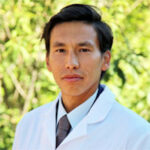
Jérémie Calais, MD, PhD, is the Director of the Theranostics Program and of the Clinical Research Program in the Ahmanson Translational Theranostics Division, as well as an Associate Professor in the Department of Molecular and Medical Pharmacology at the University of California, Los Angeles. Dr. Calais received his medical degree from the University of Paris-Diderot in Paris, France, before completing his residency in nuclear medicine and cancer imaging at the Henri Becquerel Cancer Center at the University of Rouen, France. He was awarded the Diplôme d’Etat de docteur en médecine and is board-certified by the French Society of Nuclear Medicine. Dr. Calais is a UCLA faculty member of the Jonsson Comprehensive Cancer Center, the Institute of Urologic Oncology, and the Physics and Biology in Medicine Graduate Program.
Under Dr. Calais’s guidance, the clinical research program has focused on translatable radiolabeled theranostic pairs that can be used and applied for the diagnosis and therapy of cancer, and combined academic investigator-initiated and industry-sponsored studies using targeted radionuclide imaging and therapy. Dr. Calais’s work focuses on improving the outcomes of cancer patients by applying novel diagnostic and therapeutic approaches. He serves as Principal Investigator of randomized prospective phase 2 and 3 clinical trials, is a member of the Society of Nuclear Medicine and Molecular Imaging (SNMMI) and an honorary board member of the SNMMI Correlative Imaging Council, and serves as a Committee Member of the Prostate Theranostics and Imaging Centre of Excellence (ProsTIC) at Peter MacCullum Cancer Centre, University of Melbourne, Australia.