How to cite: Vedula S. What AI can teach a surgeon. Grand Rounds in Urology. October 2025. Accessed Mar 2026. https://grandroundsinurology.com/what-ai-can-teach-a-surgeon/
Summary
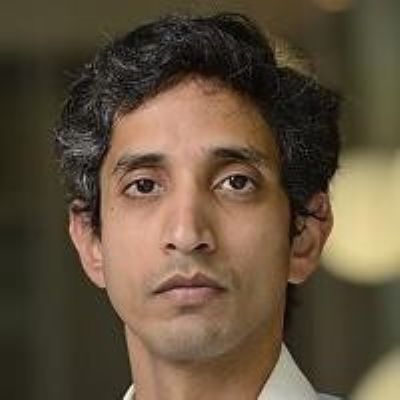
Swaroop Vedula, MBBS, MPH, PhD, Associate Research Professor, Malone Center for Engineering in Healthcare, AI for Surgery Lab, Johns Hopkins University, Baltimore, Maryland, describes how artificial intelligence supports surgical education. He observes that only a small portion of lifetime procedures occur under supervision during residency and fellowship, while most procedures across a surgical career are performed independently without structured mentoring. He cites population-based studies in ophthalmology that show early-career surgeons have a higher likelihood of significant complications, highlighting the need for systems that can guide learning after formal training.
Dr. Vedula reviews the long history of artificial intelligence in healthcare and notes the rapid growth of cleared applications in imaging and decision support. He outlines a staged framework for surgical education that begins with performance assessment, followed by targeted feedback, then coaching, and ultimately active assistive learning. He describes how surgical videos provide accessible data for these tasks. His group uses cataract surgery as an example. It applies vision-based models to break down procedures into steps, assess skills for critical phases, and generate feedback based on structured rating scales used by surgical educators.
Dr. Vedula notes that early work in virtual reality simulation encodes expert rules for tasks such as needle passing and provides detailed cues that help novice trainees reduce errors. He then explains how surgeons generate the ground truth needed for reliable models. Statistical methods that adjust for the effects of strict and lenient raters can transform multi-item checklists into continuous scores that more accurately reflect actual performance. Dr. Vedula concludes that current artificial intelligence systems support assessment and targeted feedback, but they do not yet meet the broader competencies required of human surgical educators.
Frontiers in Oncologic Prostate Care and Ablative Local Therapy (FOCAL) is an outstanding program on prostate imaging, transperineal interventions, and ablative treatments for prostate cancer and benign prostatic hyperplasia. Bringing together community-based, academic, and industry partners, FOCAL offers lectures by world-renowned faculty and hands-on training workshops on in-office transperineal interventions, fusion-guided prostate ablation and state-of-the-art BPH management with novel technologies.
ABOUT THE AUTHOR

Swaroop Vedula, MBBS, MPH, PhD, is an Associate Research Professor at Johns Hopkins University in Baltimore, Maryland. Dr. Vedula also serves as Co-Director of the Artificial Intelligence Surgery Laboratory at Johns Hopkins. His research in surgical data science draws on methods from several disciplines including computer science, epidemiology, and biostatistics.
Dr. Vedula earned his MBBS from Andhra University in Visakhapatnam, India. He then earned his MPH from Harvard University in Boston, Massachusetts. Dr. Vedula subsequently earned his PhD from Johns Hopkins. He has postgraduate training in surgery, epidemiology and computer science.
Dr. Vedula is a member of the Malone Center for Engineering in Healthcare and the Johns Hopkins Data Science and AI Institute. His research on analysis of surgical performance, supported by National Institutes of Health grants, involves translation of AI technologies for analysis of video and other sensor data through user-friendly applications that can be accessible worldwide.