

Jelle Barentsz, MD, PhD

Jelle Barentsz, MD, PhD

Prostate MRI Reference Center

Gelderland, Netherlands

Jelle Barentsz, MD, PhD, is the Head of the Division of Medical Imaging and the Head of the Prostate MRI Reference Center in Gelderland, Netherlands. Dr. Barentsz is an internationally acclaimed radiologist whose visionary work has redefined how prostate cancer is detected, diagnosed, and managed across the globe. His research focuses in particular on the application of functional imaging in tumor diagnostics.

Dr. Barentsz earned his medical degree from Utrecht University in the Netherlands. He earned his PhD, with groundbreaking work on MRI in bladder cancer, from Radboud University. 

Dr. Barentsz is known for pioneering the development of PI-RADS, which is now a global standard for prostate MRI and has resulted in a 50% reduction in biopsies. He is also a champion of Ferrotran-MRI (formerly Combidex-nano-MRI) for detecting small lymph node metastases. He is recognized as the architect of modern prostate MRI, and his contributions have resulted in the prevention of more than 1 million unnecessary biopsies every year, dramatically reducing overdiagnosis and overtreatment, and improving outcomes for patients worldwide. Dr. Barentsz has authored and co-authored over 360 publications, and has served as Imaging Editor for European Urology. He is the founder of the Prostate MR Reference Center and organizer of the prestigious 5th and 12th edition of the successful ESUR Prostate Teaching Courses.

Talks by Jelle Barentsz, MD, PhD

Are MRI Fusion Biopsies Necessary for Urologists?

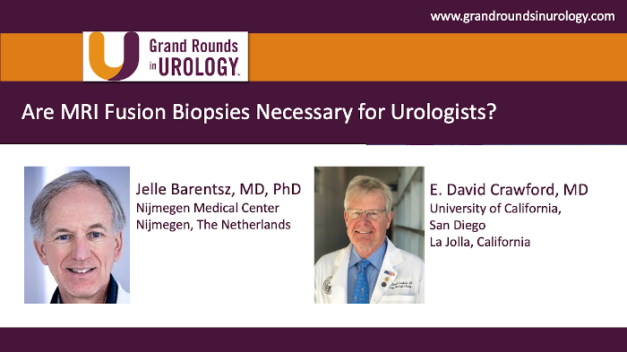
E. David Crawford, MD, Editor-in-Chief of Grand Rounds in Urology, interviews Jelle Barentsz, MD, PhD, Professor of Radiology at the University in Nijmegen in the Netherlands, about prostate cancer suspicions and which metrics define prostate cancer risk. Dr. Barentsz discusses the steps that must be taken if there is a suspicion of prostate cancer and emphasizes the importance that MRIs and molecular markers play in this. He notes that in an optimal world with a perfect MRI a molecular marker test is often unnecessary, but that sometimes we do not have perfect MRIs, and in these cases, molecular marker tests like SelectMDX are good tests to use. However, MRIs offer more information about potential cancer and are also better at excluding more significant cancers than molecular marker tests. Dr. Crawford and Dr. Barentsz come to the conclusion that which is better or necessary often depends on the country the patient resides in.

Read More

What Does Suspicion for Prostate Cancer Mean, and What Metric Defines Prostate Cancer Risk?

E. David Crawford, MD, Editor-in-Chief of Grand Rounds in Urology, interviews Jelle Barentsz, MD, PhD, Professor of Radiology at the University in Nijmegen in the Netherlands, about prostate cancer suspicions and which metrics define prostate cancer risk. Dr. Barentsz discusses the steps that must be taken if there is a suspicion of prostate cancer and emphasizes the importance that MRIs and molecular markers play in this. He notes that in an optimal world with a perfect MRI a molecular marker test is often unnecessary, but that sometimes we do not have perfect MRIs, and in these cases, molecular marker tests like SelectMDX are good tests to use. However, MRIs offer more information about potential cancer and are also better at excluding more significant cancers than molecular marker tests. Dr. Crawford and Dr. Barentsz come to the conclusion that which is better or necessary often depends on the country the patient resides in.

Read More
  • 1
  • 2