How to cite: Yu EY. “Hormone-Sensitive Metastatic Prostate Cancer: 1, 2, or 3 Drugs?” October 23, 2025. Accessed Oct 2026. https://grandroundsinurology.com/hormone-sensitive-metastatic-prostate-cancer-1-2-or-3-drugs/
Summary
Evan Y. Yu, MD, Professor of Oncology, University of Washington, Seattle, Washington, delivers a comprehensive, evidence-driven overview of treatment intensification strategies for metastatic hormone-sensitive prostate cancer, focusing on whether patients should receive one, two, or three systemic agents upfront. Dr. Yu emphasizes that treatment intensification remains underutilized despite consistent survival benefits demonstrated across multiple randomized trials.
Epidemiologic data show rising rates of metastatic prostate cancer and persistent racial disparities. Dr. Yu highlights that androgen deprivation therapy (ADT) alone is no longer sufficient for most patients, yet real-world data show that many patients still receive ADT monotherapy, particularly older adults.
Key randomized trials supporting doublet therapy with ADT plus an androgen receptor pathway inhibitor (ARPI) are reviewed, including LATITUDE, STAMPEDE, ENZAMET, ARCHES, TITAN, and ARANOTE. These trials consistently demonstrate significant improvements in radiographic progression-free survival and overall survival across disease volume and risk subgroups, establishing ADT plus an ARPI as the current foundation of care.
Triplet therapy is examined in detail through PEACE-1 and ARASENS. Dr. Yu explains that adding abiraterone or darolutamide to ADT plus docetaxel improves survival, particularly in patients with de novo, high-volume metastatic disease. However, he emphasizes that docetaxel is no longer routinely recommended for all patients and should be reserved for carefully selected individuals.
Emerging strategies are discussed, including molecular and biomarker-driven intensification. Data from the AMPLITUDE trial are reviewed, demonstrating improved outcomes with the addition of niraparib to ADT plus abiraterone in patients with homologous recombination repair alterations. The PSMAddition trial is also presented, showing improved radiographic progression-free survival with early integration of lutetium-177 PSMA-617, though overall survival data remain immature.
Unresolved questions around de-escalation, intermittent therapy, and optimal patient selection are addressed. Dr. Yu stresses that prostate-specific antigen response, disease volume, presentation at diagnosis, and molecular features will increasingly guide individualized treatment strategies.
About the 28th Annual Southwest Prostate Cancer Symposium:
Presented by Program Chairs Nelson N. Stone, MD, Richard G. Stock, MD, and William K. Oh, MD, this conference educated attendees about advances in the management of localized and advanced prostate cancer, with a focus on imaging, technology, and training in the related devices. It included a scientific session, as well as live demonstrations of surgical techniques. You can learn more about the conference here.
ABOUT THE AUTHOR
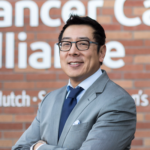
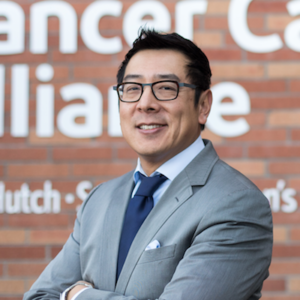
Evan Y. Yu, MD, is a medical oncologist specializing in prostate, bladder, and testicular cancer treatment and research. He graduated Alpha Omega Alpha from the University of Washington School of Medicine. He completed internal medicine residency at the Brigham and Women’s Hospital and oncology fellowship and post-doctoral training at the Dana-Farber Cancer Institute. He returned to Seattle at the end of 2004 to join the faculty at the University of Washington and Fred Hutchinson Cancer Research Center. He now is a Full Professor, the Clinical Research Director for GU malignancies, Core Director for the Pacific Northwest Prostate Cancer SPORE and co-PI of the DoD Prostate Cancer Clinical Trials Consortium at his institution. His research focuses on testing the next wave of novel molecular targeted therapies and immunotherapy techniques, with a complementary focus on imaging biomarkers. In addition to an active clinical and research practice, he also is the Medical Director for Clinical Research Services at the Fred Hutchinson Cancer Consortium. He served as a Hematology/Oncology Fellowship Program Director for a decade at the Fred Hutchinson Cancer Research Center. He has regularly been voted a “Top Doctor” by Castle Connolly, U.S. News and World Report, Seattle magazine, and Seattle Met magazine. He has served for many years on the National Cancer Institute Genitourinary Cancers Steering Committee and is newly appointed as the Co-Chair for the National Cancer Institute Prostate Cancer Task Force. He remains active in SWOG and he also serves as an editor for Clinical Cancer Research, Clinical Genitourinary Cancer, and Uro-Today.