How to cite: Di Giorgio A. Long-term outcomes of PSMA PET/CT-guided radiotherapy in biochemical failure patients post-radical prostatectomy: a 5-year follow-up analysis. Grand Rounds in Urology. Accessed Apr 2026. https://grandroundsinurology.com/long-term-outcomes-of-psma-pet-ct-guided-radiotherapy-in-biochemical-failure-patients-post-radical-prostatectomy-a-5-year-follow-up-analysis/
Summary
Andrea Di Giorgio, MD, University of Bologna Medical Center, Bologna, Italy, reports on a five-year analysis of prostate-specific membrane antigen (PSMA) positron emission tomography/computed tomography (PET/CT)-guided radiotherapy for men who experience biochemical recurrence following radical prostatectomy. He explains that PSMA PET/CT offers improved detection of recurrent disease compared to conventional imaging. Patients with biochemical recurrence undergo PSMA PET/CT to identify locoregional and metastatic disease, tailoring radiotherapy planning designed to improve disease control.
The five-year analysis includes patients who underwent PSMA PET/CT before salvage radiotherapy. Outcomes reported include progression-free survival, overall survival, and biochemical response rates. Dr. Di Giorgio emphasizes that PSMA PET/CT-guided radiotherapy demonstrates durable control in a substantial proportion of patients, with acceptable toxicity profiles.
He notes that while the data show promise, additional validation through larger multicenter cohorts and randomized trials is required. Ongoing studies focus on refining criteria for patient selection, integrating molecular and genomic biomarkers, and exploring optimal sequencing with systemic therapies. Dr. Di Giorgio concludes that PSMA PET/CT-guided radiotherapy represents an important step forward in the precision management of biochemical recurrence after prostatectomy.
The Global Summit on Precision Diagnosis and Treatment of Prostate Cancer is a unique multi-disciplinary forum organized to inform the key health care stakeholders about the emerging advances in clinical case and research and create a consensus-based vision for the future of precision care and educational and research strategy for its realization. The mission of the Summit is to fill the currently existing gap between the key experts of in vivo imaging, the world authorities in the in vitro fluid- and tissue-based molecular diagnostics, including genomics, and thought leaders in the development of novel observation strategies (e.g., active surveillance, or AS) and therapeutic interventions.
ABOUT THE AUTHOR
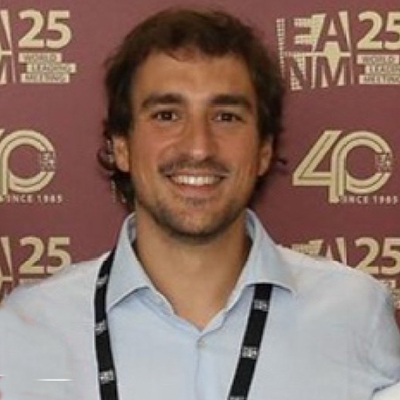
Andrea Di Giorgia, MD, is a Resident Physician of Nuclear Medicine with the Università di Bologna in Emilia-Romagna, Italy. He previously served as a visiting scholar at the EXPLORER Molecular Imaging Center at the University of California, Davis. Dr. Di Giorgio’s clinical and research interests include nuclear medicine, prostate cancer, PET imaging, and urologic oncology. He has authored or co-authored more than 25 publications in his field.