How to cite: Song H. Molecular imaging at prostate cancer biochemical recurrence. Grand Rounds in Urology. Accessed Oct 2026. https://grandroundsinurology.com/molecular-imaging-at-prostate-cancer-biochemical-recurrence/
Summary
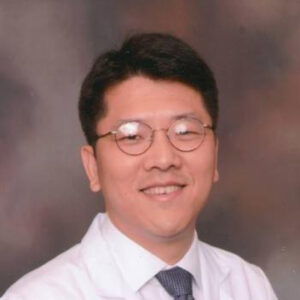
Hong Song, MD, PhD, Assistant Professor, Division of Nuclear Medicine and Molecular Imaging, Department of Radiology, Stanford University, Palo Alto, California, reviews the use of prostate-specific membrane antigen positron emission tomography (PSMA PET) in men with biochemical recurrence after primary therapy. He explains that conventional imaging often fails to identify disease at low prostate-specific antigen (PSA) levels. In contrast, PSMA PET can detect small lesions, including those in bone and lymph nodes.
Dr. Song summarizes evidence from pivotal trials of gallium-68 and fluorine-18 PSMA tracers. Detection rates exceed 90 percent at PSA levels above 5 ng/mL, with clinically meaningful detection even when PSA is below 0.5 ng/mL. Meta-analyses demonstrate that PSMA PET changes management in nearly 60 percent of cases, frequently enabling metastasis-directed therapy.
He emphasizes the significance of the oligometastatic state, characterized by limited sites of disease progression. Randomized trials such as ORIOLE and STOMP show that stereotactic ablative radiation of oligometastatic lesions delays progression and extends treatment-free survival. PSMA PET facilitates accurate identification of such patients.
Dr. Song also reviews the use of quantitative imaging metrics and artificial intelligence to refine prognostic assessment. He notes that while PSMA PET has been rapidly adopted, high-quality prospective data demonstrating a survival benefit remain limited.
Dr. Song argues that PSMA PET is the most sensitive imaging modality for biochemical recurrence, significantly alters management, and may improve outcomes when integrated with metastasis-directed therapy.
The Global Summit on Precision Diagnosis and Treatment of Prostate Cancer is a unique multi-disciplinary forum organized to inform the key health care stakeholders about the emerging advances in clinical case and research and create a consensus-based vision for the future of precision care and educational and research strategy for its realization. The mission of the Summit is to fill the currently existing gap between the key experts of in vivo imaging, the world authorities in the in vitro fluid- and tissue-based molecular diagnostics, including genomics, and thought leaders in the development of novel observation strategies (e.g., active surveillance, or AS) and therapeutic interventions.
ABOUT THE AUTHOR

Hong Song, MD, PhD, is an Assistant Professor of Radiology (Nuclear Medicine) at Stanford University in Stanford, California. Additionally, Dr. Song is a member of the Stanford Cancer Institute. He is a nuclear medicine physician and a diagnostic radiology specialist. Dr. Song’s research interests include PSMA PET in biochemically recurrent prostate cancer and DOTATATE PET in PRRT for neuroendocrine tumors.