How to cite: Ghai S. MRI after focal treatment: University of Toronto experience. September 15, 2025. Accessed January 2026. https://grandroundsinurology.com/mri-after-focal-treatment-university-of-toronto-experience/
Summary
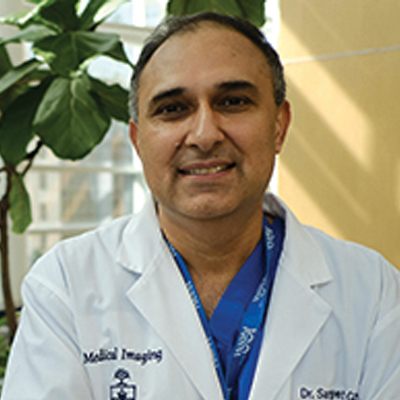
Sangeet Ghai, MD, FRCR, Director of Research and Associate Professor, University of Toronto, Toronto, Canada, describes the goals of follow-up MRI after focal therapy, including identifying residual disease in the treated zone and detecting cancer elsewhere in the gland. He emphasizes that an assessment tool should provide a high negative predictive value, allowing men to avoid unnecessary biopsies.
Dr. Ghai outlines candidate structured systems for post-treatment reporting. He refers to the PI-FAB and the TARGET scoring approach for preliminary guidance. These systems consider major MRI domains.
Dr. Ghai discusses key elements for reports, including the timing of scans relative to treatment, the definition of the ablation zone, the location of any suspicious findings, and correlation with targeted or systematic biopsy when performed. He also notes limitations that may affect interpretation, such as edema, post-procedural change, and technical differences in acquisition.
Dr. Ghai asserts that the use of standardized terminology and explicit criteria could reduce variation between readers and centers. MRI after focal therapy shows promise as part of structured follow-up, and scoring systems may assist in triage for biopsy and in early outcome assessment.
The Global Summit on Precision Diagnosis and Treatment of Prostate Cancer is a unique multi-disciplinary forum organized to inform the key health care stakeholders about the emerging advances in clinical cases and research and create a consensus-based vision for the future of precision care and educational and research strategy for its realization. The mission of the Summit is to fill the currently existing gap between the key experts of in vivo imaging, the world authorities in the in vitro fluid- and tissue-based molecular diagnostics, including genomics, and thought leaders in the development of novel observation strategies (e.g., active surveillance, or AS) and therapeutic interventions.
ABOUT THE AUTHOR
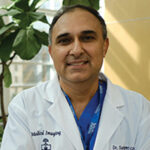
Dr. Sangeet Ghai is the Director of Research and Associate Professor in the Joint Department of Medical Imaging (JDMI) at the University of Toronto in Ontario, Canada. He is affiliated with the Cancer Clinical Research Unit at the Princess Margaret Cancer Centre, also in Toronto. Dr Ghai completed his postgraduate training in India, including a senior residency at the All India Institute of Medical Sciences in New Delhi. His main areas of interest and research include prostate imaging and intervention. He is actively involved in developing prostate MRI techniques, high-resolution ultrasound imaging of the prostate, and in-bore focal treatments for intermediate-risk prostate cancer, as well as MR-guided focused ultrasound surgery and MR-guided focal laser ablation.