How to cite: Kovac E. MRI-Targeted Biopsy Alone: Precision Without Redundancy. Grand Rounds in Urology. October 23, 2025. Accessed Oct 2026. https://grandroundsinurology.com/mri-targeted-biopsy-alone-precision-without-redundancy/
Summary
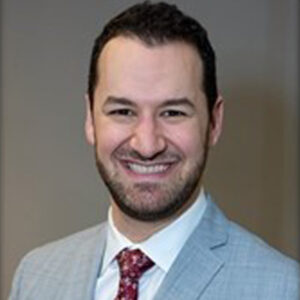
Evan Kovac, MD, CM, FRCSC, Associate Professor and Director, Urologic Oncology, Rutgers University, Newark, New Jersey, argues that magnetic resonance imaging (MRI)-targeted biopsy provides sufficient diagnostic accuracy for prostate cancer detection without the added morbidity of systematic cores.
Dr. Kovac first reviews guidelines addressing this topic, emphasizing that systematic biopsy is optional and supported by conditional recommendations with low-grade evidence. He discusses evidence from randomized trials and meta-analyses that indicates MRI-targeted biopsy alone detects clinically significant cancer at similar rates to those of combined approaches, while markedly reducing the detection of clinically insignificant disease and allowing a significant proportion of patients to avoid biopsy.
Prospective randomized evidence from biopsy-naïve populations supports an MRI-first pathway with targeted biopsy only, demonstrating noninferiority for clinically significant cancer detection, reduced low-grade cancer detection, and no long-term penalty at two-year follow-up. Dr. Kovac uses active surveillance data to illustrate how using MRI and targeted biopsy to guide follow-up ensures oncologic safety while yielding high negative predictive value and low false-negative rates.
Dr. Kovac outlines the biologic differences between MRI-visible and MRI-invisible lesions, with MRI-visible tumors demonstrating higher cellular density, distinct gene expression profiles, and associations with adverse outcomes. He suggests that missing MRI-invisible lesions usually means missing insignificant cancers.
Dr. Kovac addresses technique considerations, using data showing equivalent cancer detection between transperineal and transrectal targeting. He also discusses data from a counterexample retrospective study, acknowledging a modest miss rate with targeted biopsy alone while emphasizing that most clinically significant cancers are still detected through MRI-targeted sampling.
Dr. Kovac concludes that MRI-targeted biopsy delivers precision, reduces harm, and avoids overtreatment and unnecessary morbidity, rendering systematic cores a legacy practice from the pre-MRI era.
About the 28th Annual Southwest Prostate Cancer Symposium:
Presented by Program Chairs Nelson N. Stone, MD, Richard G. Stock, MD, and William K. Oh, MD, this conference educated attendees about advances in the management of localized and advanced prostate cancer, with a focus on imaging, technology, and training in the related devices. It included a scientific session, as well as live demonstrations of surgical techniques. You can learn more about the conference here.
ABOUT THE AUTHOR
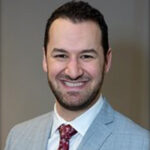
Evan Kovac, MD, CM, FRCSC, is an Associate Professor and Director of Urologic Oncology at Rutgers University in Newark, New Jersey. Dr. Kovac also serves as the Associate Program Director of the Urology Residency at Rutgers University. He specializes in the evaluation and treatment of cancers of the urinary tract, including prostate, kidney, bladder, testicular, adrenal and penile cancers. Dr. Kovac has specific expertise in ultrasound-MRI fusion biopsy for the diagnosis of prostate cancer, as well as, endoscopic and robotic surgery techniques for the treatment of genitourinary cancers.
Dr. Kovac earned his medical degree and completed a residency in Urology at McGill University in Montreal, Canada. He then completed a fellowship in Urologic Oncology and Robotics at the Cleveland Clinic in Cleveland, Ohio. Dr. Kovac is a Fellow of the Royal College of Surgeons of Canada.
Dr. Kovac has authored and co-authored over 60 publications and book chapters on urologic oncology. He is considered a leader in the optimization of prostate-specific antigen screening for the early detection of prostate cancer. Dr. Kovac led a collaboration with primary care physicians to create a novel prostate cancer screening decision aid designed specifically for multi-ethnic, underserved communities. He also led the establishment of a first-of-its-kind prostate cancer center in the Bronx, New York.