This content is available free to the GRU Community. Login or create an account to view it.
How to cite: Sotile WM. Provider Resilience: Facts and Fictions. Grand Rounds in Urology. October 2025. Accessed Jan 2026. https://grandroundsinurology.com/provider-resilience-facts-and-fictions
Summary
Wayne M. Sotile, PhD, Founder, Sotile Center for Resilience and Center for Physician Resilience, Davidson, North Carolina, examines the concept of provider resilience by distinguishing between evidence-based realities and common misconceptions that undermine well-being in healthcare. Dr. Sotile frames resilience not as toughness or intelligence, but as a learned, teachable set of coping strategies that enable individuals and teams to navigate adversity and emerge stronger.
Using narrative examples and decades of research, Dr. Sotile defines resilience as post-trauma growth rather than simple recovery to baseline. He emphasizes that resilience is multifactorial and relational, shaped by individual coping skills, family dynamics, team functioning, and organizational culture. He challenges the notion of a perfectly balanced life, calling it a misleading ideal that breeds guilt, ambivalence, and disengagement rather than well-being.
Dr. Sotile underlines the distinction between temporary burnout symptoms and chronic burnout. He explains that burnout reflects momentary depletion of coping energy and typically resolves with recovery, while chronic burnout affects a smaller proportion of clinicians. He cautions against “burnout hysteria,” arguing that fear of burnout itself can drive disengagement, reduce fulfillment, and strain professional and personal relationships.
He highlights the critical role of emotions in shaping behavior, health habits, leadership, and interpersonal effectiveness. Positive emotions support better decision-making, coping, and collaboration, while negative emotions amplify unhealthy behaviors and relational conflict. Dr. Sotile underscores that family satisfaction is influenced less by hours worked and more by emotional presence and mood when returning home.
Dr. Sotile introduces practical resilience frameworks, including growth mindset, accurate coping roadmaps, and unambivalent engagement. He emphasizes that meaningful work, supportive relationships, collaboration, and humility are core protective factors. He stresses that resilience is fundamentally collective, shaped by how individuals work together, manage conflict, and build cultures rooted in trust, respect, and shared purpose.
About The 12th Urology Today Conference:
Presented by chair Ryan P. Terlecki, MD, FACS, the 12th Urology Today conference was designed to keep urologists, urologic oncologists, and other healthcare providers educated on the most pertinent issues in urology practices. Areas of focus included urologic oncology, men’s health and reconstruction, female urology, pediatric urology, kidney stones and related conditions, and methods of providing the best care amidst the required logistics of the business side of medicine.
For further educational activities from this conference, visit our collection page.
ABOUT THE AUTHOR
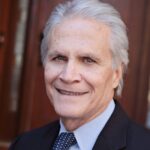
Wayne M. Sotile, PhD, is the Founder of the Center for Physician Resilience and Sotile Center for Resilience, and of Sotile Psychological Associates, PLL and Real Talk, Inc. in Davidson, North Carolina. Dr. Sotile also serves as a Special Consultant in Behavioral Health for the Carolinas Medical Center, and as a Clinical Assistant Professor in the Department of Orthopaedic Surgery at Tulane University. Dr. Sotile is one the world’s most seasoned clinicians specializing in life coaching for physicians.
Dr. Sotile earned his Bachelor’s of Science in Psychology from Louisiana State University in Baton Rouge. He then completed his PhD in Clinical Psychology at the University of South Carolina in Columbia, South Carolina. Dr. Sotile then completed an internship in Medical Psychology at Duke University in Durham, South Carolina.
Dr. Sotile’s solution-focused life coaching process emphasizes practical applications of evidence-based findings from the combined fields of resilience, positive psychology, marriage/family systems, and adult developmental psychology. He has been invited to perform over 9,000 guest lectures at workshops for the American Medical Association Leadership Conference, American Association of Health System Pharmacists, VHA Chief Nursing Officers Conference, the American Medical Association Alliance, the International Conference on Physician Wellness, the American Academy of Medical Administrators, and numerous meetings of medical specialty societies and hospital communities.