How to cite: Lucia MS. The Role of the Pathologist in the Selection and Monitoring of Patients for Active Surveillance. Grand Rounds in Urology. October 23, 2025. Accessed Apr 2026. https://grandroundsinurology.com/the-role-of-the-pathologist-in-the-selection-and-monitoring-of-patients-for-active-surveillance/
Summary
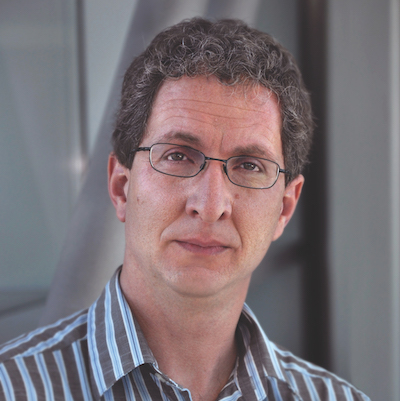
M. Scott Lucia, MD, Professor and Vice Chair of the Department of Pathology, Chief of Genitourinary and Renal Pathology, and Director of Research Histology, University of Colorado Anschutz Medical Campus, Aurora, Colorado, examines the central role of the pathologist in selecting and monitoring patients for active surveillance in prostate cancer. Dr. Lucia focuses on how pathological interpretation directly shapes eligibility for surveillance, particularly in men with low-risk and favorable intermediate-risk disease, and how variability in grading, assessment of Gleason pattern 4, and biopsy sampling can alter management decisions.
Dr. Lucia references NCCN guideline categories that describe active surveillance as preferred for very low-risk and low-risk prostate cancer and as an option for select patients with favorable intermediate-risk disease. He states that pathology determines whether a patient fits into these categories and emphasizes that this responsibility places pathologists at the center of surveillance decision-making.
He describes prostate cancer biology as a continuum, explaining that pathologists attempt to assign tumors into discrete grade groups. Grade group 1 tumors are described as appropriate candidates for active surveillance. For grade group 2 tumors, Dr. Lucia states that the amount of Gleason pattern 4 becomes critical and discusses how different thresholds have been used to define what may still be considered favorable.
Dr. Lucia focuses on grading variability and describes a digital pathology study involving expert genitourinary pathologists who independently reviewed biopsy images. He explains that there was incomplete agreement, particularly between grade groups 1 and 2. In cases without consensus, most grade group 2 interpretations involved small amounts of pattern 4.
Acknowledging that many active surveillance decisions are still based on standard transrectal ultrasound-guided biopsy, Dr. Lucia contrasts this approach with MRI-targeted biopsy and transperineal template-guided mapping biopsy to illustrate grading and upgrading differences.
Dr. Lucia discusses additional tools that may assist the decision-making process, including artificial intelligence applied to biopsy interpretation and genomic assays. Dr. Lucia explains how such adjuncts may help estimate tumor behavior and inform active surveillance decisions.
About the 28th Annual Southwest Prostate Cancer Symposium:
Presented by Program Chairs Nelson N. Stone, MD, Richard G. Stock, MD, and William K. Oh, MD, this conference educated attendees about advances in the management of localized and advanced prostate cancer, with a focus on imaging, technology, and training in the related devices. It included a scientific session, as well as live demonstrations of surgical techniques.
ABOUT THE AUTHOR

M. Scott Lucia, MD, is a Professor and Vice Chair of the Department of Pathology, the Chief of Genitourinary and Renal Pathology, and the Director of Research Histology at the University of Colorado Anschutz Medical Campus School of Medicine in Aurora, Colorado. He also serves as the Director of the Pathology Shared Resource at the University of Colorado Cancer Center.