Sequencing of Treatment
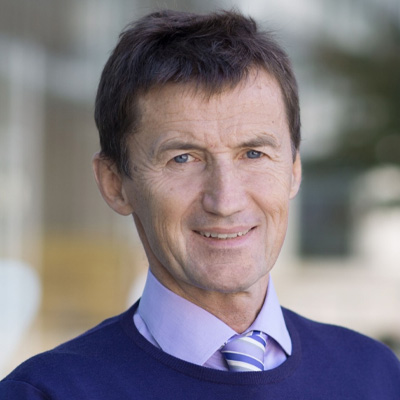
Arnulf Stenzl, MD, reviews sequencing strategies for advanced prostate cancer.
Read More

Arnulf Stenzl, MD, reviews sequencing strategies for advanced prostate cancer.
Read More
Arnulf Stenzl, MD, delves into sequencing treatments for prostate cancer and integrating technology and data into patient care.
Read More
Arnulf Stenzl, MD, discusses the challenges of appropriately sequencing advanced prostate cancer treatment and presents possible solutions. In his presentation, he addresses:
Recent and Anticipated Changes in Advanced Prostate Cancer Treatment
The Issue of Physician Information Overload
The Lack of Easily Accessible Comparative Data Between Agents
Possible Applications of Artificial Intelligence in Literature Searches
Arnulf Stenzl, MD, discusses the future prospects of artificial intelligence (AI) combined with precision surgery and robotics in the diagnosis and treatment of the lower urinary tract. He outlines an intraoperative multisensory approach for tissue differentiation involving sensor development with mechanical, optical, and electric properties. Combined with AI modeling, the result is a scoring system for intraoperative identification of tissue characteristics based on multimodal/multiscale data with tissue differentiation by optical emission spectroscopy.
Dr. Stenzl displays data on the discrimination of tissue based on electrical impedance. He points out the value of discrimination of deeper tissue layers using model-based optical sensors to see and avoid, for example, vessels and nerves. Dr. Stenzl then describes a device for intraoperative real-time elastography, even at the cellular level.
He emphasizes the importance of consistent AI tissue modeling, covering multiple physical domains to combine different sensors and inform the best actions. Dr. Stenzl explains that AI can extract and reproduce features for navigation during surgery. Dr. Stenzl re-emphasizes the importance of precision surgery moving toward intraoperative diagnostics that builds on the traditional standard of frozen section and predicts the further development of precision surgery and AI technologies in the coming years.
Read More
Arnulf Stenzl, MD explores robotic-assisted versus open partial nephrectomy for patients with intermediate to high-complexity renal cell carcinoma.
Read More