
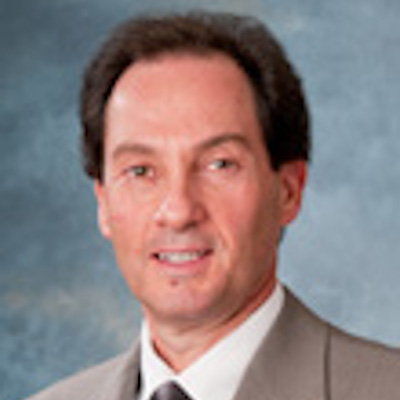
Franklin Gaylis, MD, FACS

Franklin Gaylis, MD, FACS

Genesis Healthcare Partners

San Diego, California

Franklin D. Gaylis, MD, FACS, is a Co-Founder and the Medical Director of Genesis Healthcare Partners in San Diego, California. Dr. Gaylis also serves as the Executive Medical Director for Unio Health Partners and holds a voluntary position as Professor of Urology at the University of California, San Diego. Dr. Gaylis specializes in prostate cancer and developing clinical tools aimed at improving outcomes following radical prostatectomy.

Dr. Gaylis graduated Cum Laude with his MBBCh at the University of Witwatersrand in Johannesburg, South Africa. He completed his residency in General Surgery at the University of Minnesota in Minneapolis-St. Paul, and then completed his fellowship in Urology, with an emphasis in prostate cancer, at Northwestern University in Evanston, Illinois. Additionally, he was inducted into the Alpha Omega Alpha Medical Honor Society.

Dr. Gaylis has authored and co-authored numerous publications and has been featured in prominent journals, including Journal of Urology, Urology Practice, American Journal of Medical Quality, and the New England Journal of Medicine. He provides urological guidance for therapeutics, diagnostics, and biomarker clinical trials and has conducted several advisory boards for sponsors seeking guidance regarding protocols in development. Dr. Gaylis is also a Fellow of the American College of Surgeons, a member of the American Urological Association, and a diplomat of the American Board of Urology. He has received the Sharp Grossmont Hospital Physician Philanthropy award for 2009 and is recognized as one of San Diego’s Top Doctors by Checkbook’s guide to Top Doctors.

Talks by Franklin Gaylis, MD, FACS

Pay for Performance Model to Improve Quality of Active Surveillance in Low-Risk Prostate Cancer

In the final installment of a 3-part series, Franklin Gaylis, MD, FACS, Chief Scientific Officer of Genesis Healthcare Partners and Voluntary Professor of Urology at the University of California, San Diego, reviews measures derived from a project looking at the value of a pay for performance model in improving the quality of active surveillance in low-risk prostate cancer. He also considers the utility, simplicity, and economy of using an electronic medical record-embedded template. Dr. Gaylis concludes by suggesting that government entities and physicians should collaborate to create the best medical standards and practices possible as the US healthcare system makes the transition from volume to value.

Read More
Leveraging the EMR to Improve Quality in Clinical Practice

In part 2 of a 3-part series, Franklin Gaylis, MD, FACS, Chief Scientific Officer of Genesis Healthcare Partners and Voluntary Professor of Urology at the University of California, San Diego, shows how quality reporting improves adherence to best practices in use of active surveillance for low-risk prostate cancer. He reviews the results of a study he and his team began conducting in 2011 which showed that adoption of active surveillance for low-risk prostate cancer increased from 32% to 58% over the course of 3 years as a result of the adoption of reporting standards and reporting transparency whereby doctors could see others’ data. Since widespread adoption of active surveillance is considered a best practice, these data demonstrate how quality reporting can improve care.

Read More

Leveraging the EMR to Improve Quality in Risk Stratification for Prostate Cancer

In part 1 of a 3-part series, Franklin Gaylis, MD, FACS, Chief Scientific Officer of Genesis Healthcare Partners and Voluntary Professor of Urology at the University of California, San Diego, looks at how improved quality reporting can improve risk stratification for prostate cancer. He explains that quality reporting is expensive and time-consuming, but also necessary, and looks at how it can be improved. As an example, he considers a study by Genesis Healthcare intended to improve documentation and staging templates for digital rectal examinations (DREs) for prostate cancer staging and risk stratification. They found that by leveraging the electronic medical record (EMR) with explicit templates, they were able to increase physician confidence in DRE findings. Dr. Gaylis concludes that by encouraging urology practices to record more accurate and precise DRE information, better templates for reporting can improve patient care.

Read More