How to cite: Sheetz TJ. “BPH Cases: Small Prostate, Large Prostate, Median Lobe, and Anticoagulation.” Grand Rounds in Urology. November 13, 2025. Accessed Feb 2026. https://grandroundsinurology.com/bph-cases-small-prostate-large-prostate-median-lobe-and-anticoagulation/
Summary
Moderated by Tyler J. Sheetz, MD, 2023-25 Kaiser Endourology Fellow, University of California, San Diego, San Diego, California, this case-based panel discussion explores real-world decision-making in benign prostatic hyperplasia (BPH) surgery across a range of challenging clinical scenarios, including small and large prostates, median lobes, anticoagulation, prior procedures, neurogenic bladder, and concurrent prostate cancer. The group addresses tailoring BPH management to patient goals, anatomy, comorbidities, and social context rather than relying on a single procedural algorithm.
The discussion opens with index cases highlighting moderate-sized prostates with severe lower urinary tract symptoms refractory to medical therapy. Panelists emphasize the importance of shared decision-making, counseling patients on expected timelines for symptom improvement, durability, and the tradeoffs between minimally invasive therapies and tissue-removing procedures. Holmium laser enucleation of the prostate (HoLEP), transurethral resection of the prostate (TURP), Rezūm™, Aquablation, and other options are discussed as viable choices, depending on patient priorities such as the speed of relief, durability, and preservation of sexual function.
Several cases address BPH management in patients with concurrent or incidentally discovered prostate cancer. Data show that HoLEP can be safely performed in men on active surveillance without compromising oncologic outcomes, provided close postoperative prostate-specific antigen (PSA) and magnetic resonance imaging (MRI) monitoring is performed. The panel discusses subsequent definitive prostate cancer treatment options after HoLEP, noting higher surgical complexity for radical prostatectomy but acceptable outcomes, with radiation therapy often favored post-HoLEP.
Median lobe anatomy and ejaculation-sparing approaches are explored, including median lobe HoLEP and Rezūm therapy in large glands. Evidence is reviewed demonstrating symptom improvement, low retreatment rates, and potential preservation of ejaculatory function in selected patients.
Management of BPH in patients on anticoagulation is discussed in depth. Panelists stress individualized perioperative planning based on indication for anticoagulation, procedure type, and surgeon experience, with emphasis on achieving excellent hemostasis and coordinating closely with cardiology and anesthesia.
The session concludes with challenging social scenarios, such as patients with limited follow-up ability or urgent travel needs. In these cases, panelists favor definitive, durable procedures that minimize retreatment risk and postoperative complexity.
About the 32nd Annual Perspectives in Urology: Point Counterpoint conference: Presented by Program Chair and Grand Rounds in Urology Editor-in-Chief E. David Crawford, MD, this conference brought together leading experts in urology, medical oncology, and radiation oncology to discuss and debate the latest topics in genitourinary cancers, primarily prostate cancer and bladder cancer. This interactive conference offered topical lectures, pro/con debates, interesting-case presentations, interactive panel discussions, and interactive audience and faculty networking.
ABOUT THE AUTHOR
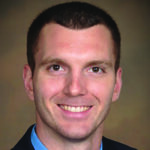
Tyler J. Sheetz, MD, is the 2023-25 Kaiser Endourology Fellow at the University of California, San Diego, under the mentorship of Dr. Roger Sur, and an assistant professor in the university’s Urology Department. Dr. Sheetz specializes in minimally invasive surgery and stone disease.

Mitchell R. Humphreys, MD, is Chair of the Department of Urology at the Mayo Clinic in Phoenix, Arizona. Dr. Humphreys’ clinical focus is on surgical and metabolic stone disease, benign prostatic hyperplasia (with a special focus on HoLEP), and minimally invasive genitourinary oncology. His research interests include urological malignancies and benign diseases; innovative, minimally invasive surgical procedures; and technology to improve treatments and outcomes.
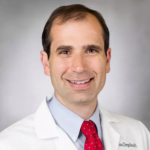
Seth K. Bechis, MD, MS, is an Associate Professor of Urology at the University of California, San Diego. Dr. Bechis specializes in all procedures of the prostate, including minimally invasive procedures such as Rezum water vapor therapy and UroLift, as well as robotic surgery and GreenLight Laser photoselective vaporization of the prostate. His current research focuses on improving surgical techniques and clinical outcomes in stone disease, as well as tools for stone diagnosis and opiate-sparing pathways for managing pain.
Dr. Bechis earned his Master’s of Science in Biomedical Sciences and his medical degree from the University of California, San Francisco. He completed his residency at Harvard University in Boston, Massachusetts. Dr. Bechis then completed a fellowship in Laparoscopy/Robotics and Endourology at the University of California, San Francisco.
Dr. Bechis is a member of several professional medical organizations, including the American Urological Association (AUA), the Endourological Society, and the Western Section of the AUA. He has won numerous awards and honors over the years, including the Whitehill Award for Excellence in Clinical Teaching in 2019, Plenary Address for Best Abstract from the American Urological Association in 2015, and first place in the 2014 Max K. Willscher Resident Research Award Competition. Dr. Bechis has been invited to speak nationally and internationally at conferences on topics including benign prostatic hyperplasia and stone disease. His research has been featured in peer-reviewed medical journals, including Journal of Urology, Journal of Endourology, and World Journal of Urology. Additionally, Dr. Bechis was editor of First Aid Q&A for the USMLE Step 1, Second Edition, and has authored chapters for university handbooks.
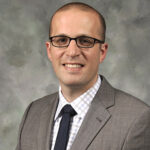
Jonathan H. Berger, MD, MPH, FACS, is a Urologist at Scripps Memorial Hospital in La Jolla, California. Dr. Berger’s research interests are at the cross section of public health and urology. Dr. Berger is a member of the American Urological Association and a Fellow of the American College of Surgeons.