How to cite: George AK, Emberton M, Gupta GN, Taneja SS. Case discussions: surveillance and recurrence in focal therapy. Grand Rounds in Urology. Published October 2025. Accessed Apr 2026. https://grandroundsinurology.com/case-discussions-surveillance-and-recurrence-in-focal-therapy/
Summary
Moderator Arvin K. George, MD, Director of Prostate Cancer Programs and Associate Professor of Clinical Urology at Johns Hopkins University, Baltimore, Maryland, leads a group of experts in discussing multiple cases that illustrate the uncertainty that arises during follow-up after focal ablation. The first case is a man with rising prostate-specific antigen (PSA) after right high-intensity focused ultrasound (HIFU) ablation. Despite the expected PSA decline, he shows continued elevation from 7.7 to over 14. Slides confirm complete ablation on magnetic resonance imaging (MRI), with no evidence of residual disease. Prostate-specific membrane antigen positron emission tomography (PSMA PET) reveals only mild, heterogeneous uptake without metastasis.
Panelists comment that PSA decline after focal therapy typically exceeds fifty to sixty percent, but emphasize that PSA alone is unreliable. They suggest assessing PSA density, velocity, and trends rather than isolated values.
Discussion shifts to biopsy interpretation. Panelists explain that small Grade Group 1 foci or patchy chronic inflammation on biopsy may explain PSA rise and may not represent true recurrence. They debate the value of early post-ablation biopsy. Some describe the institutional practice of three three-month targeted and systematic biopsies, but others caution that early sampling may reflect transient healing changes rather than residual disease.
Another case involves periurethral and apex lesions with discordant imaging and pathology. Experts describe circumstances in which irreversible electroporation (IRE) or HIFU can safely treat lesions abutting the urethra while acknowledging the risk of undertreatment or urethral injury. They analyze the role of PSMA PET versus MRI. Some prefer MRI first due to local detail, while others favor PSMA PET to exclude nodal disease and avoid unnecessary biopsy. Panel members also discuss testosterone replacement and its impact on PSA interpretation.
The session concludes with the recognition that a rising PSA after focal therapy has multiple benign and malignant explanations. Decision-making must incorporate imaging, biopsy, clinical context, and patient-specific factors to ensure accurate and informed treatment decisions.
Frontiers in Oncologic Prostate Care and Ablative Local Therapy (FOCAL) is an outstanding program on prostate imaging, transperineal interventions, and ablative treatments for prostate cancer and benign prostatic hyperplasia. Bringing together community-based, academic, and industry partners, FOCAL offers lectures by world-renowned faculty and hands-on training workshops on in-office transperineal interventions, fusion-guided prostate ablation and state-of-the-art BPH management with novel technologies.
ABOUT THE AUTHOR

Arvin K. George, MD, serves as Director of Prostate Cancer Programs and Associate Professor (PAR) of Urology at Johns Hopkins School of Medicine in Baltimore, Maryland. He is a urologic surgeon who specializes in the diagnosis and management of genitourinary cancers. After obtaining his medical degree from the Royal College of Surgeons in Ireland, he completed his urology residency at the Smith Institute for Urology at the Hofstra North Shore-LIJ School of Medicine. He remained there to complete his endourology fellowship in New York, gaining additional subspecialty expertise in robotic, laparoscopic, and percutaneous surgery. Subsequently, he completed a urologic oncology fellowship at the National Cancer Institute of the National Institutes of Health. Dr. George’s research interests include minimally-invasive and image-guided treatments, functional prostate imaging, and focal therapy for prostate cancer. His research aims to identify appropriate use for imaging in diagnosis, risk stratification, and management of prostate cancer, including active surveillance and selection/treatment of patients with novel focal therapy modalities.

Mark Emberton, MD, FRCS, is Dean for the Faculty of Medical Sciences, and Professor of Interventional Oncology for the Division of Surgery and Interventional Science at University College London in London, England. He is also an Honorary Clinical Director of the Clinical Effectiveness Unit at the Royal College of Surgeons of England, and UCL Partners' Pathway Director for urological oncology for London Cancer. Professor Emberton’s clinical research is aimed at improving the diagnostic and risk stratification tools and treatment strategies for prostate cancer. He specializes in the implementation of new imaging techniques, nanotechnologies, bio-engineering materials, and non-invasive treatment approaches, such as high intensity focused ultrasound and photo-dynamic therapy.
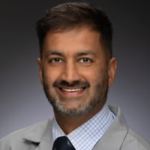

Samir S. Taneja, MD, a surgeon whose long career has been spent in driving innovation in urologic cancer diagnosis and treatment, especially prostate cancer, has been selected to lead Northwell Health’s urology service line. Dr. Taneja has been appointed the senior vice president and chair of urology at Northwell Health and the chair of the Smith Institute for Urology. Previous to his position at Northwell Health, Dr. Taneja spent 29 years at NYU Langone Health, most recently serving as vice chair of the Department of Urology, director of the Division of Urologic Oncology, and a professor of urology and radiology at the medical school, as well as professor of bioengineering at the NYU Tandon School of Engineering.
The work that Dr. Taneja conducted at NYU Langone and its Perlmutter Cancer Center and Smilow Comprehensive Prostate Cancer Center has transformed the field of prostate cancer diagnosis and treatment by improving methods of prostate imaging, cancer detection, and disease localization. Dr. Taneja strives to integrate new technologies into his practice to evolve the practice of oncology. This has allowed him to care for prostate cancer patients individually by avoiding surgery or radiation when not needed, and using new targeted approaches to treat the disease when possible.
Dr. Taneja’s clinical research focuses on the use of imaging to detect and treat prostate cancer. He pioneered the use of MRI to diagnose and pinpoint prostate cancer, and in MRI-guided focal ablative therapies that aim to destroy the only cancerous portion of the prostate. Dr. Taneja has authored more than 200 articles, 30 book chapters, and 6 textbooks and monographs on urologic cancer and surgery. In addition, he is the editor of Taneja’s Complications of Urologic Surgery: Prevention and Diagnosis, one of the most widely read textbooks in American urology.