How to cite: Bechis SK. Reduce, Reuse, or Recycle? Single-Use Scopes. Grand Rounds in Urology. November 14, 2025. Accessed Apr 2026. https://grandroundsinurology.com/reduce-reuse-or-recycle-single-use-scopes/
Summary
Seth K. Bechis, MD, MS, Professor of Urology, University of California, San Diego, San Diego, California, examines whether single-use ureteroscopes should be reduced, reused, or recycled, weighing clinical performance, cost, ergonomics, infection risk, workflow efficiency, and environmental impact. He reviews how rising ureteroscopy volume has increased scope damage, reprocessing burden, infection risk, and costs, prompting broader adoption of disposable technologies.
Dr. Bechis begins by outlining the goals of ureteroscopy in stone surgery, including higher stone-free rates, improved efficiency, faster operating room turnover, fewer infections, reduced scope damage, and better surgeon ergonomics. Reprocessing time for reusable scopes is reviewed in detail, with institutional data showing several hours required per cycle, additional delays if repairs are needed, and substantial per-episode costs. Because reusable scopes cannot be turned over quickly, multiple scopes are often required for a full operative day.
Clinical outcomes associated with single-use scopes are presented. Data demonstrate lower postoperative urinary tract infection rates and higher stone clearance rates with disposable scopes compared with reusable devices. Multivariable analyses show significantly reduced odds of postoperative infection when single-use scopes are employed. Studies comparing operative performance show improved maneuverability, reduced surgeon fatigue, and favorable ergonomics with disposable platforms.
Scope size and deflection are highlighted as key advantages. Smaller-diameter single-use scopes allow reduced or eliminated sheath use, shorter operative times, improved renal access, and comparable complication rates. Data also demonstrate better compatibility with suction-based techniques such as flexible and navigable suction sheaths, resulting in shorter laser times, smaller sheath sizes, and higher zero residual fragment rates.
Dr. Bechis contrasts the higher solid waste generated by disposable scopes with the substantial water, energy, chemical exposure, and emissions required for reprocessing reusable scopes. Environmental impact varies by region, energy grid, and waste-handling infrastructure. Emerging innovations, including bioplastics, take-back programs, and energy recovery systems, are discussed as future mitigation strategies.
Dr. Bechis highlights that single-use scopes meet many of the clinical and ergonomic goals of ureteroscopy, while environmental impact remains an evolving, region-dependent consideration.
About the 32nd Annual Perspectives in Urology: Point Counterpoint conference: Presented by Program Chair and Grand Rounds in Urology Editor-in-Chief E. David Crawford, MD, this conference brought together leading experts in urology, medical oncology, and radiation oncology to discuss and debate the latest topics in genitourinary cancers, primarily prostate cancer and bladder cancer. This interactive conference offered topical lectures, pro/con debates, interesting-case presentations, interactive panel discussions, and interactive audience and faculty networking.
ABOUT THE AUTHOR
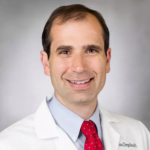
Seth K. Bechis, MD, MS, is an Associate Professor of Urology at the University of California, San Diego. Dr. Bechis specializes in all procedures of the prostate, including minimally invasive procedures such as Rezum water vapor therapy and UroLift, as well as robotic surgery and GreenLight Laser photoselective vaporization of the prostate. His current research focuses on improving surgical techniques and clinical outcomes in stone disease, as well as tools for stone diagnosis and opiate-sparing pathways for managing pain.
Dr. Bechis earned his Master’s of Science in Biomedical Sciences and his medical degree from the University of California, San Francisco. He completed his residency at Harvard University in Boston, Massachusetts. Dr. Bechis then completed a fellowship in Laparoscopy/Robotics and Endourology at the University of California, San Francisco.
Dr. Bechis is a member of several professional medical organizations, including the American Urological Association (AUA), the Endourological Society, and the Western Section of the AUA. He has won numerous awards and honors over the years, including the Whitehill Award for Excellence in Clinical Teaching in 2019, Plenary Address for Best Abstract from the American Urological Association in 2015, and first place in the 2014 Max K. Willscher Resident Research Award Competition. Dr. Bechis has been invited to speak nationally and internationally at conferences on topics including benign prostatic hyperplasia and stone disease. His research has been featured in peer-reviewed medical journals, including Journal of Urology, Journal of Endourology, and World Journal of Urology. Additionally, Dr. Bechis was editor of First Aid Q&A for the USMLE Step 1, Second Edition, and has authored chapters for university handbooks.