Immunotherapy for Bladder Cancer
Drs. Finkelstein and Pieczonka review new intravesical immunotherapies for bladder cancer, challenges in practice, and future potential of radiation combinations.
Read More

Drs. Finkelstein and Pieczonka review new intravesical immunotherapies for bladder cancer, challenges in practice, and future potential of radiation combinations.
Read More
Drs. Finkelstein, Pieczonka, and Lam review advances in robotic surgery, radiopharmaceuticals, and research advantages in group practice cancer care.
Read More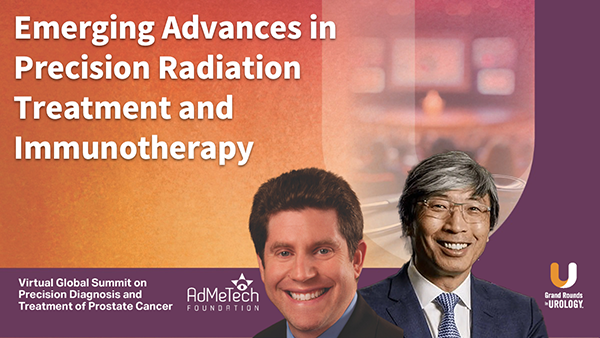
Drs. Steven E. Finkelstein and Patrick Soon-Shiong explore integrating immunotherapy with radiation in prostate cancer care. They highlight NK cell activation, IL-15 pathways, and trial opportunities aimed at reducing recurrence and improving long-term patient outcomes.
Read More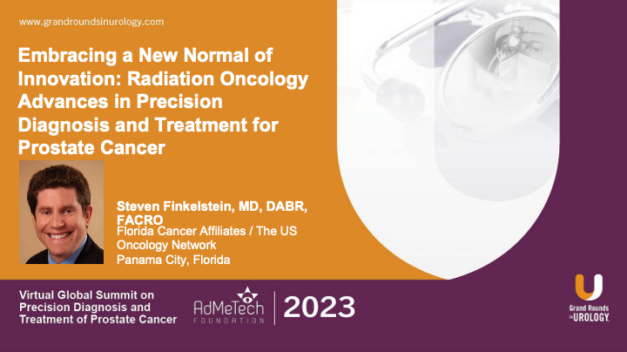
Steven E. Finkelstein, MD, FACRO, examines the advances in radiation oncology that are reshaping precision diagnosis and treatment for prostate cancer. He highlights how recent technological developments have enhanced both the accuracy and effectiveness of radiation therapy.
Dr. Finkelstein discusses cutting-edge imaging techniques such as multiparametric MRI and PET/CT scans, which enable clinicians to precisely delineate tumor boundaries and identify regions of aggressive disease. He also explores advancements in radiation delivery techniques, including intensity-modulated radiation therapy (IMRT) and stereotactic body radiation therapy (SBRT).
The presentation addresses the role of artificial intelligence (AI) and machine learning in revolutionizing radiation oncology. AI algorithms are being developed to assist in treatment planning, predict patient responses, and adapt therapies based on tumor changes. These technologies promise to streamline workflows, reduce planning times, and enhance the precision of radiation delivery.
Read More
Steven E. Finkelstein, MD, FACRO, a radiation oncologist with Florida Cancer Affiliates in Panama City, Florida, discusses the role of androgen deprivation therapy (ADT) with radiation therapy (RT) in patients with prostate cancer. Dr. Finkelstein first discusses the definitive setting, explaining optimal durations for the addition of ADT to RT under various circumstances. For example, when local control with RT alone is good, ADT is never given; when the risk of local failure is high, ADT is given for 3-6 months as a radiation sensitizer; and when the risk of distant disease is high, ADT treatment is given for 2-3 years. Dr. Finkelstein goes on to illustrate data that show ADT does not improve survival in men receiving RT for low-risk disease, short-term ADT improves survival in men receiving RT for intermediate-risk disease, and ADT was effective in improving survival for patients with “modern” high- and intermediate-risk disease. Dr. Finkelstein discusses dose escalation in RT and cites an ongoing study examining 1520 patients who received either 79.2 Gy alone or 79.2 Gy plus 6 months of ADT, with the primary endpoint being overall survival (OS), asserting that the study will be seminal once the results have been published. He then reviews the current summary recommendations in the definitive setting: for low-risk (NCCN definition) and low-intermediate-risk patients, the recommendation is surveillance, brachytherapy (BT), or external beam radiation therapy (EBRT) with no recommendation for ADT; for high-intermediate risk patients, the recommendation is EBRT +/- BT with 4-6 months of ADT (GnRH agonist); and for high-risk (NCCN definition) patients, the recommendation is EBRT +/- BT with 24 months of ADT(GnRH agonist). Dr. Finkelstein then introduces Kevin D. Healey, a research intern and medical student level two, who delivers the second part of the presentation, focusing on the salvage setting. Mr. Healey presents research from the GETUG-AFU 16 trial, examining short-term ADT combined with RT as salvage treatment after radical prostatectomy for prostate cancer: a 112-month follow-up of a phase 3, randomized trial. He concludes that salvage RT combined with short-term ADT significantly reduced the risk of biochemical or clinical progression and death compared with salvage RT alone. Further, the results of the trial confirm the efficacy of ADT plus RT as salvage treatment in patients with increasing PSA concentration after radical prostatectomy for prostate cancer. Dr. Finkelstein then concludes the presentation with the current summary recommendations for the salvage setting, including adding a 6-month course of ADT (LHRHa) to salvage RT in men with no or minimal comorbidity, given the near halving of progression and the possible reduction in mortality due to prostate cancer.
Read More