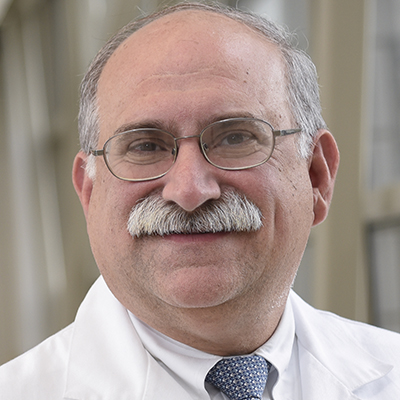
Leonard G. Gomella, MD, FACS

Leonard G. Gomella, MD, FACS

Thomas Jefferson University

Philadelphia, Pennsylvania

Leonard G. Gomella, MD, FACS, completed medical school and general surgery and urology training at the University of Kentucky in Lexington. After a urologic oncology fellowship in the surgery branch of the National Cancer Institute, National Institutes of Health in Bethesda, Maryland. Dr. Gomella is currently the Bernard W. Godwin, Jr. Professor of Prostate Cancer, Chairman of the Department of Urology, Senior Director of Clinical Affairs for the Sidney Kimmel Comprehensive Cancer Center, and the Enterprise VP of Urology at the Jefferson Health System, at Thomas Jefferson University in Philadelphia, Pennsylvania. 

Dr. Gomella is involved in both basic science and clinical research in the development of new diagnostic techniques and treatments for prostate, bladder and kidney cancer through Jefferson’s Sidney Kimmel Comprehensive Cancer Center. Dr. Gomella's team was first to use RT-PCR to detect micrometastasis in patients with prostate cancer, a discovery that led to a new field of investigation in this disease. Dr. Gomella is also recognized as an early contributor to urologic laparoscopy, initiating the program at Jefferson in 1990.

Dr. Gomella has given almost 500 presentations at local, national and international meetings and written over 300 papers, chapters and monographs in the field of Urology. Dr. Gomella has authored and edited 54 editions of 17 different books for medical students, residents, and practicing physicians, many of which have been translated into foreign languages. He is the editor-in-chief of the 5 Minute Urology Consult, and laparoscopy section editor for Glenn’s Urologic Surgery. Recovering from Prostate Cancer, the first book for the public dedicated to this topic, was authored by Dr. Gomella. In the field of medicine, Dr. Gomella is known for the Clinician's Pocket Reference, now in its 11th edition, a widely used reference for medical students and health care providers.

Talks by Leonard G. Gomella, MD, FACS

Utilizing ctDNA in Bladder Cancer

Leonard G. Gomella, MD, FACS, explores the potential of circulating tumor DNA (ctDNA) and cell-free DNA (cfDNA) as biomarkers in cancer detection, treatment monitoring, and prognosis.

In this 12-minute presentation, Dr. Gomella reviews recent studies, such as those conducted at the European Association of Urology (EAU), demonstrating ctDNA’s potential for early detection, risk assessment, treatment response evaluation, and post-treatment surveillance in bladder cancer. Trials such as InVigor010 highlight ctDNA’s prognostic utility, where analysis revealed that ctDNA positivity predicted a higher risk of relapse.

Gomella reports that innovations extend to ctDNA detection in urine, offering a non-invasive method to monitor disease burden. These developments and the integration of advanced sequencing technologies mark a new era in cancer management, facilitating earlier interventions and more effective treatment planning.

Read More

Role of Precision Medicine in the Diagnosis and Management of Prostate Cancer

Leonard G. Gomella, MD, FACS explores the rapid evolution of precision medicine, particularly in the context of prostate cancer, highlighting the shift from a one-size-fits-all approach to more personalized, genomics-based strategies. Precision medicine aims to tailor treatment and prevention strategies to the individual, moving beyond traditional methods to incorporate genetic, genomic, and molecular data.

In this 12-minute presentation, Dr. Gomella discusses key components of precision medicine in prostate cancer, including biomarkers, risk prediction, stratification, and drug repurposing. Advances in imaging technologies, such as improved MRI and ultrasound, as well as liquid biopsies, allow for deeper insights beyond histology, utilizing biomarkers, RNA tumor markers, and detailed genomic analysis. These innovations facilitate a more precise understanding of individual patients’ cancer profiles, helping to refine screening and treatment decisions.

Further, he asserts that precision medicine has substantially impacted the management of advanced prostate cancer, with targeted therapies tailored to genetic mutations and molecular characteristics. This approach exemplifies the precision targeting of treatments based on individual tumor profiles, optimizing outcomes and minimizing unnecessary interventions.

Read More

Panel Discussion: Next Generation Genomics and Prostate Cancer Biomarkers

Leonard G. Gomella, MD, FACS, leads a panel discussion with Gerald L. Andriole, Jr., MD; Alan H. Bryce, MD; Brian F Chapin, MD; E. David Crawford, MD; Steven E. Finkelstein, MD, FACRO; A. Karim Kader, MD, PhD; and Neal D. Shore, MD, FACS on how biomarkers are being used to treat prostate cancer. Biomarkers are used to diagnose PCa and to decide whether or not to biopsy or repeat biopsy. They also discuss how biomarkers are used to treat localized disease and advanced disease.

Read More

How Academic Urology Institutions are Coping with the COVID-19 Pandemic

Leonard G. Gomella, MD, FACS, the Bernard W. Godwin, Jr., Professor of Prostate Cancer and Chairman of the Department of Urology at the Sidney Kimmel Medical College at Thomas Jefferson University, discusses how academic urologic institutions are coping with the COVID-19 crisis. He highlights how the pandemic has created an asymmetric practice model as cases go before an OR committee to determine which can be postponed and which need to go forward. This asymmetric model may affect relative value units (RVUs) as the year goes on, but Dr. Gomella emphasizes the need to care for patients in this time of crisis over worrying about the details of reimbursement. He further discusses the need to transition to telehealth but also recognizes that this is not a practical solution for some older patients who are not confident in their use of technology. Phone visits have proven to be an effective solution in these cases, as cross-state licensing rules have been temporarily abolished. Dr. Gomella also speculates on the potential need to suspend all truly non-life threatening surgeries and its impact on patients.

Read More